Is Silver Feather Grass the Same as Mexican Feather Grass?
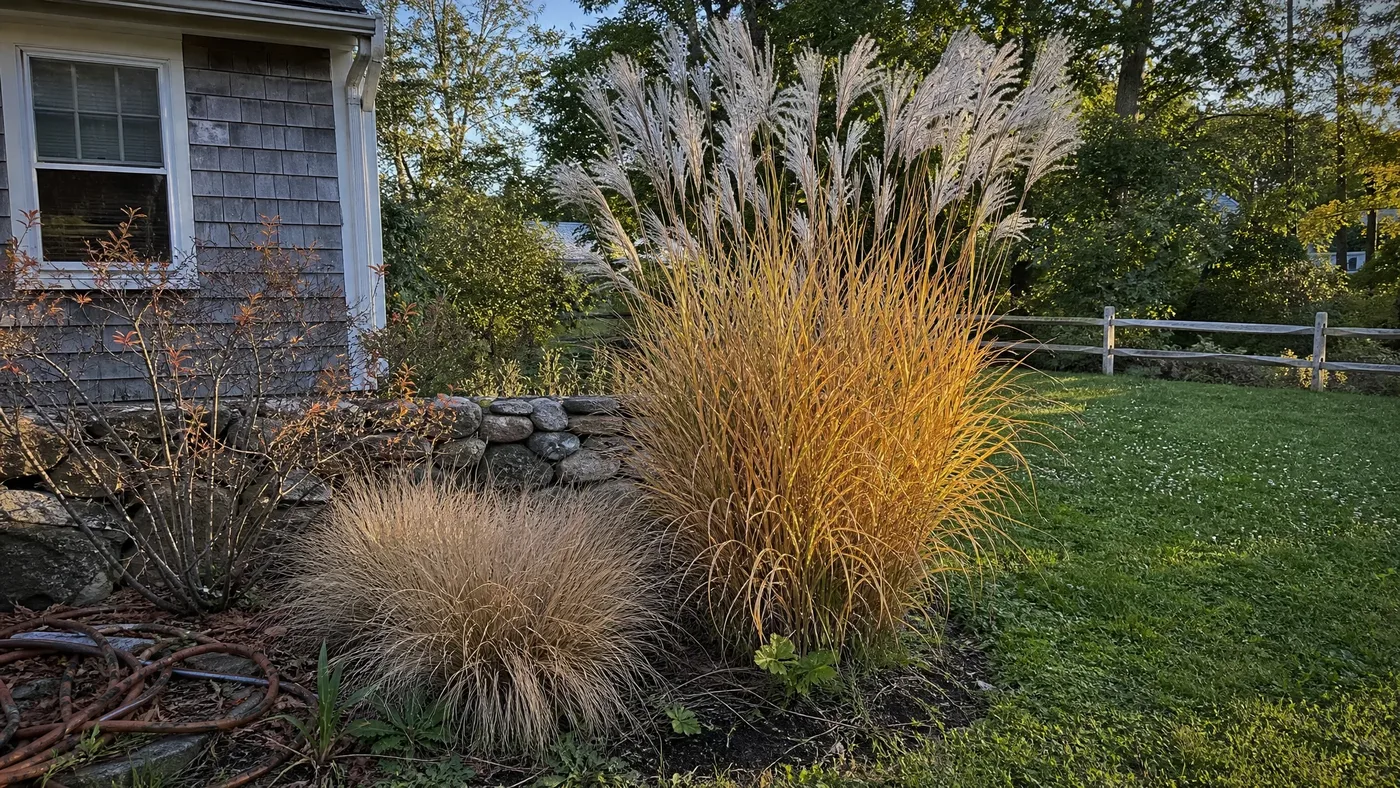
Late on a September afternoon, a customer stood between two benches of grass, both tagged "feather grass," and asked us, "Which one is the silver feather grass that glows when the sun gets low?" It is one of the most common questions we get, and the honest answer is that only one bench holds the plant.
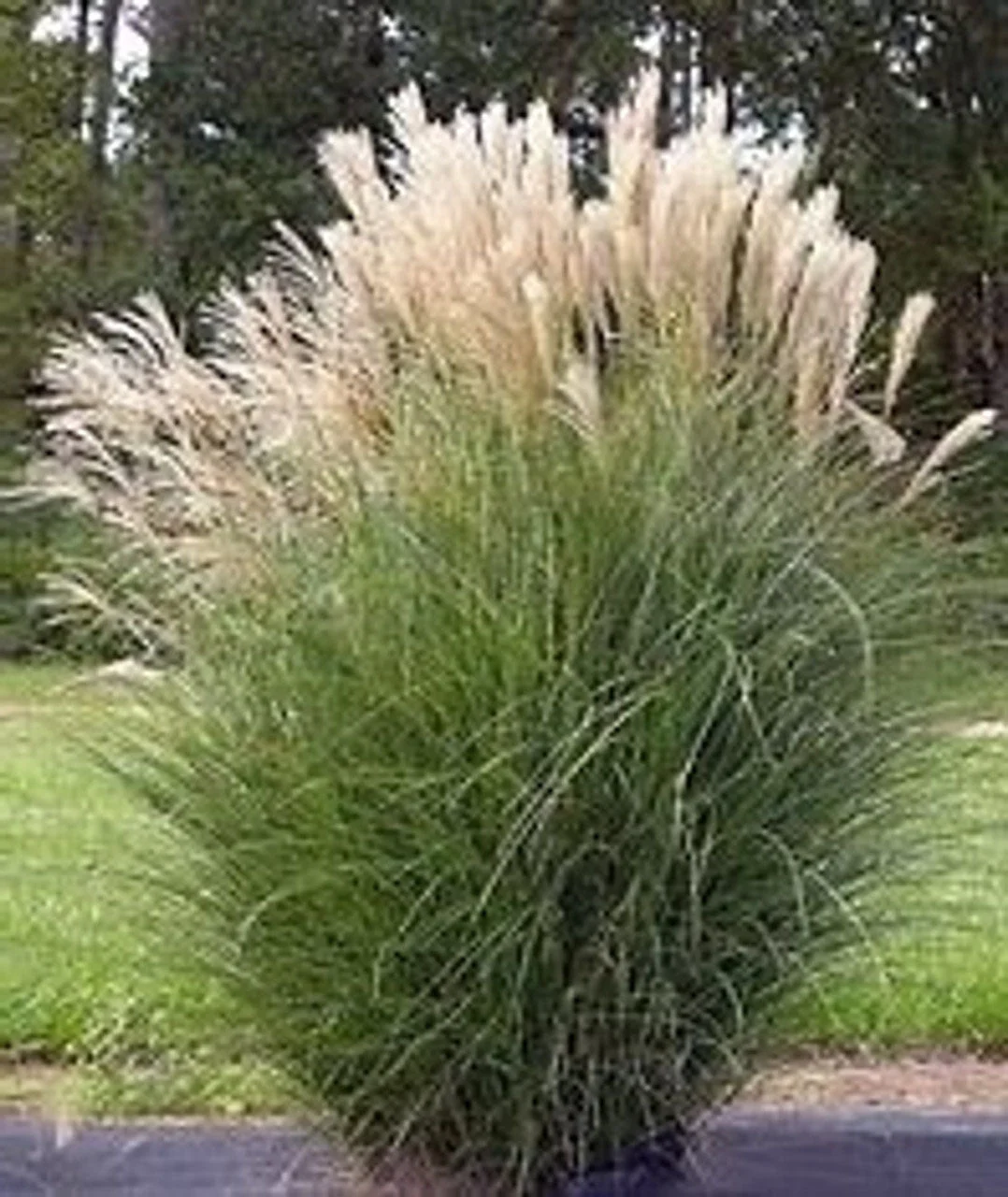
Silver Feather Grass is Miscanthus sinensis 'Silberfeder', a tall clump with plumes held well above the leaves. The knee-high, fine-leaved plants sold under similar names belong to other genera, and planting the wrong one gets you a plant that stays small, may not survive your winters, or may seed itself across the yard.
We'll walk you through how the plumes, foliage and habits compare with Mexican feather grass, Stipa barbata and a bottlebrush Pennisetum, then show you which tag details to trust and the one test to use at the bench.
Why Silver Feather Grass Plumes Glow and Others Stay Buff
Backlighting needs a plume that is large, dense and held high, and 'Silberfeder' has all three. Its large, feathery plumes emerge a shimmering pinkish-silver in late summer, which is where the name comes from. The plumes then fade toward silvery white as the season goes on.
They also ride on stems that reach 7–8 feet, so you see them against open sky instead of against soil and mulch. The show runs from August into October, which means the low, warm light of fall catches the plumes just as they are fullest. Seen from the east side of a border in late afternoon, the whole clump looks lit from inside.
The look-alikes carry their flowers at ankle to knee height, tucked into their own foliage, and their seed heads read as pale straw or buff rather than silver. A plume at head height behaves like a lantern, and a seed head at shin height behaves like a rug. If you have ever mistaken the grass for its famous cousin, our comparison with pampas grass covers that confusion too.
Fine Threads Beside Broad Arching Blades
Mexican feather grass, sold as Stipa tenuissima and also filed as Nassella tenuissima, is built almost opposite to our Miscanthus. Where Silver Feather throws up bold, ribbon-like blades, Mexican feather grass spins out hair-fine leaves that move in the slightest air. Put them side by side and they sit at opposite ends of the texture scale.
Mound Versus Fountain
Missouri State describes Mexican feather grass as a cool-season grass from the southwestern U.S. and Mexico with very slender, flexible, arching leaves forming a mound about 12–24 inches tall and wide. Its height can also run as low as 1–3 feet. Silver Feather, by comparison, grows 7–8 feet tall and 4–6 feet wide with long arching green blades.
That gap in scale changes everything about where you use each one. A mound of Mexican feather grass is an edging or rock garden plant, while a Silver Feather clump is a screen, a backdrop or a specimen. We cover the numbers in how big Silver Feather Grass gets.
What Each Does in a Border
Texas Tech calls Mexican feather grass one of the most finely-textured ornamental grasses available, and designers use it to soften a hard edge or to blur a gravel path. Silver Feather works the other way, giving a border a strong vertical line that the finer plants can gather around.
Hardiness splits them as well. Texas Tech rates Mexican feather grass for zones 7–9, while NC State lists 'Silver Feather' for zones 4a–9b. If you garden in a cold zone, the fine-textured plant on the tag is likely not the one that will come back in spring.
Stipa Barbata Awns Against Silver Feather Grass Plumes
Stipa barbata is the one that most often travels under the name "silver feather grass" in shops and online listings. Its flowers end in very long, twisted awns that shine silver in the sun, so the confusion is understandable. The resemblance stops at the color, though, because the form and movement are different.
Each awn is a separate thread, and a flowering plant looks like a shower of loose silver filaments that ripple and tangle in a breeze. The Miscanthus plume is a branching, feathery spike that holds together as a single shape. On stiff upright stems it leans and sways as a whole rather than rippling strand by strand.
Scale is the second giveaway. Stipa barbata has narrow foliage and a small clump, so it reads as a fine accent at the front of a planting, while Silver Feather fills a space 4–6 feet wide. We leave exact size and hardiness figures for Stipa barbata to its own tag and your local extension service, because we do not grow it and will not guess.
If you love the shimmering thread effect, Stipa barbata is a fair choice for a dry, sunny spot at the front of a bed. If you want silver at eye level that holds its shape into winter, it is the wrong plant.
Bottlebrush Pennisetum Beside Silver Feather Grass
"Silver fountain grass" lands you in yet another genus. Pennisetum sold under names like 'Silver Fountain' carries its flowers as short, fuzzy, cylindrical spikes, the classic bottlebrush, on a fountain-shaped plant that stays well below the height of Silver Feather. The look is soft and rounded, closer to a caterpillar than to a feather.
Silhouette is where you can tell them apart from across a yard. Silver Feather's plumes are open and branching, tapering to a point and held on upright stems above arching leaves. A bottlebrush spike is a solid tube, and the spikes nod over at the ends of the foliage rather than rising above it.
We would not call these rivals so much as different jobs. Fountain-type grasses suit the front or middle of a border and the edge of a path, while Silver Feather belongs at the back, where its plumes can catch the light over everything else. Check the tag's hardiness range against your zone before you buy either one, since Silver Feather is listed for zones 4a–9b and a fountain grass may not match that.
A Hungry Self-Seeder Beside a Well-Behaved Clump
Search for "is Mexican feather grass invasive" and the sources are blunt. The grass has a potentially invasive reseeding habit, and Texas A&M AgriLife says the grass is very opportunistic and has been known to escape and become an aggressive weed on disturbed sites. If you live in the warm zones where it thrives, ask your local extension service about its status before you plant it.
Look-Alikes That Reseed
Mexican feather grass spreads by seed, not by creeping, so a few plants can turn into a drift in a couple of seasons. Seedlings pop up in gravel, cracks and the neighbor's bed. We tell customers to treat any fine-textured feather grass as a plant that needs deadheading before the seeds ripen.
A Clump That Stays Put
The species Miscanthus sinensis can be a different story, as the Washington State Noxious Weed Control Board notes it reproduces mainly by rhizomes and makes wind-dispersed seed. That is why naming the cultivar matters. NC State describes 'Silver Feather' as considered sterile that does not spread aggressively, and in our rows the clumps simply get wider, not more numerous.
The medium growth rate suits a plant you can put in and leave alone. Cut it to the ground once a year in late winter or early spring, as in our guide to when and how to cut back Silver Feather Grass, and the job is done.
Tags That Mislead and Names That Hold Up
"Feather grass" is a nickname, and nurseries stick it on whatever has soft flowers. Add silver plume grass, silver feather pampas grass and silver fountain grass and a single search can return four different genera. Pampas grass is a separate plant altogether, and "silver grass" or "silver plume grass" usually points to Miscanthus sinensis, the Chinese silvergrass.
Botanical names are what hold up. Miscanthus sinensis 'Silberfeder' is the scientific name for Silver Feather Grass, and it is sold in English as 'Silver Feather'. Those two cultivar names refer to the same plant, and they are why we recommend buying by the Latin name when a common name is vague. Our comparison of Silver Feather and other Miscanthus shows what else shares the genus.
Here is what a trustworthy tag should show you before you pay:
- The genus and species read Miscanthus sinensis, not Stipa, Nassella or Pennisetum.
- The cultivar name 'Silberfeder' or 'Silver Feather' appears in single quotes, which is what separates the sterile cultivar from the weedier species.
- The mature height is given as roughly 7–8 feet, and a tag that promises 1–3 feet is describing a different plant.
- The hardiness range reaches down to zone 4 or 5, since a tag that stops at zone 7 points toward Mexican feather grass.
A tag with only "feather grass" and a picture is a reason to ask questions, not to buy.
Telling Silver Feather Grass From Its Look-Alikes
Three traits separate the real plant from the rest: height, plume and the name on the tag. Here is how the four plants compare.
| Plant | Botanical name | Height | Foliage | Flower |
|---|---|---|---|---|
| Silver Feather Grass | Miscanthus sinensis 'Silberfeder' | 7–8 feet | Broad, arching blades | Large pinkish-silver plumes from late summer |
| Mexican feather grass | Stipa tenuissima (Nassella tenuissima) | 1–3 feet | Hair-fine, arching | Fine, pale seed heads |
| Stipa barbata | Stipa barbata | Much shorter | Narrow | Long twisted awns |
| Silver fountain grass | Pennisetum 'Silver Fountain' | Shorter | Arching fountain | Fuzzy bottlebrush spikes |
Our advice is plain. If you want height, a screen, or a plant that sits quietly in a cold-winter border, buy Silver Feather. Choose Mexican feather grass only if you garden in zones 7–9, you want its fine texture, and you will deadhead it before it seeds.
You will hear that any feather grass can stand in for another. It cannot, because they differ in size, hardiness and behavior, and the swap costs you a season. For timing the show, see when Silver Feather plumes appear.
Silver Feather Grass Passes the October Light Test
Silver Feather Grass is Miscanthus sinensis 'Silberfeder': a clump 7–8 feet tall and 4–6 feet wide, hardy in zones 4a–9b, with big plumes and no weedy habit. Mexican feather grass, Stipa barbata and the bottlebrush Pennisetum are smaller, finer plants with their own uses, and some of them reseed.
When you are standing at the bench, skip the tag and look at the light. Turn the pot so the sun sits behind it in October, and the right plant is the one whose tall plumes glow silver above the leaves, like lanterns lit from behind.
Silver Feather Grass
Nursery-grown Silver Feather Grass in sizes from Quart Plant, shipped to your door.
From $49.49
Shop Now →If you are sorting out which feather grass is which, our rows are a fair place to start, since that is where Silver Feather sits in full sun and well-drained soil. As a small grower-run business, we only ship top-quality grasses we would plant ourselves. When you are ready for the true Silberfeder from this guide, come and see the plants we have ready.