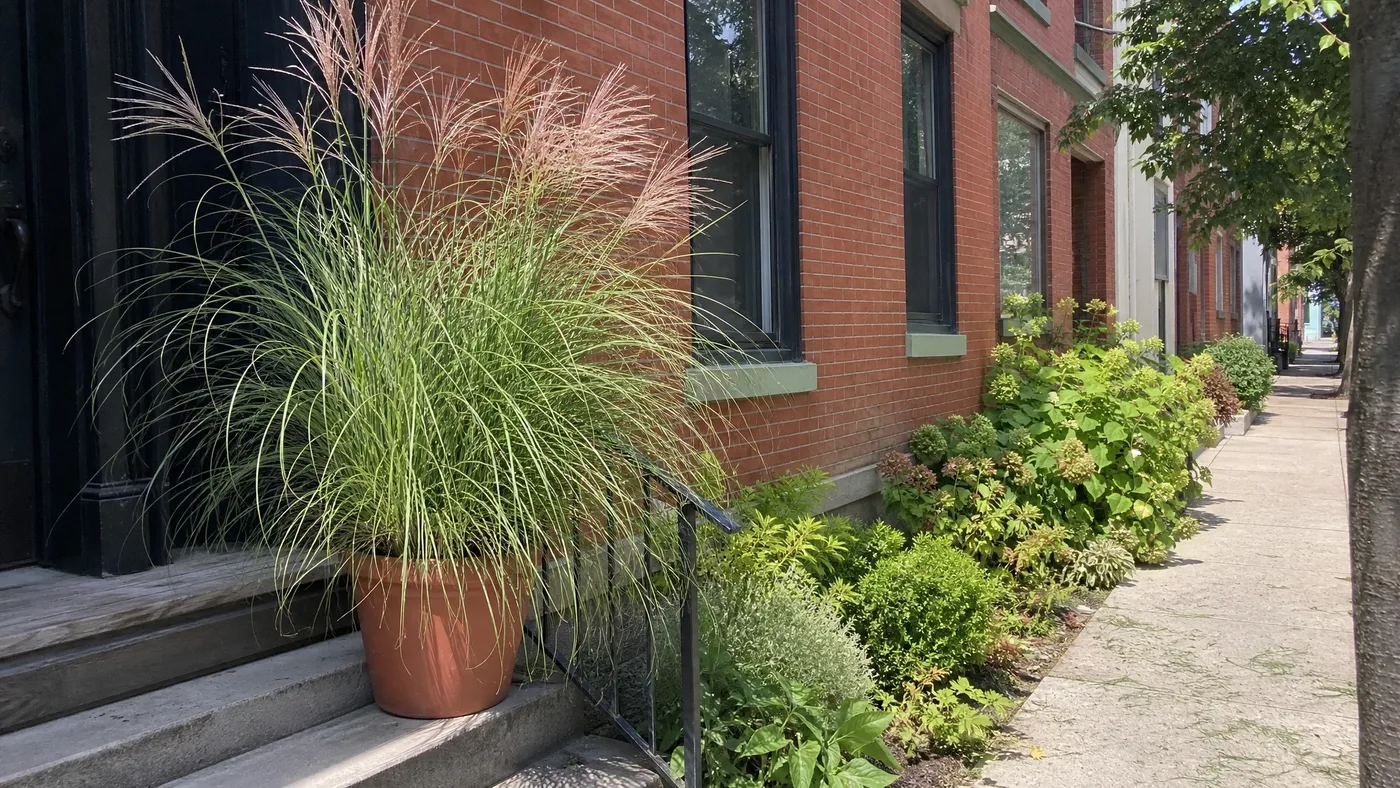
Growing Silver Feather Grass in a Pot or Large Container
A bare 20-gallon pot sits on the patio, and the question is whether a six-foot grass can be talked into living in it. Most people expect a potted grass to stay the size of its pot. Silver Feather does not work that way. It will live in 20 gallons, but it stays smaller than it would in the ground, and it asks for more of your attention in return.
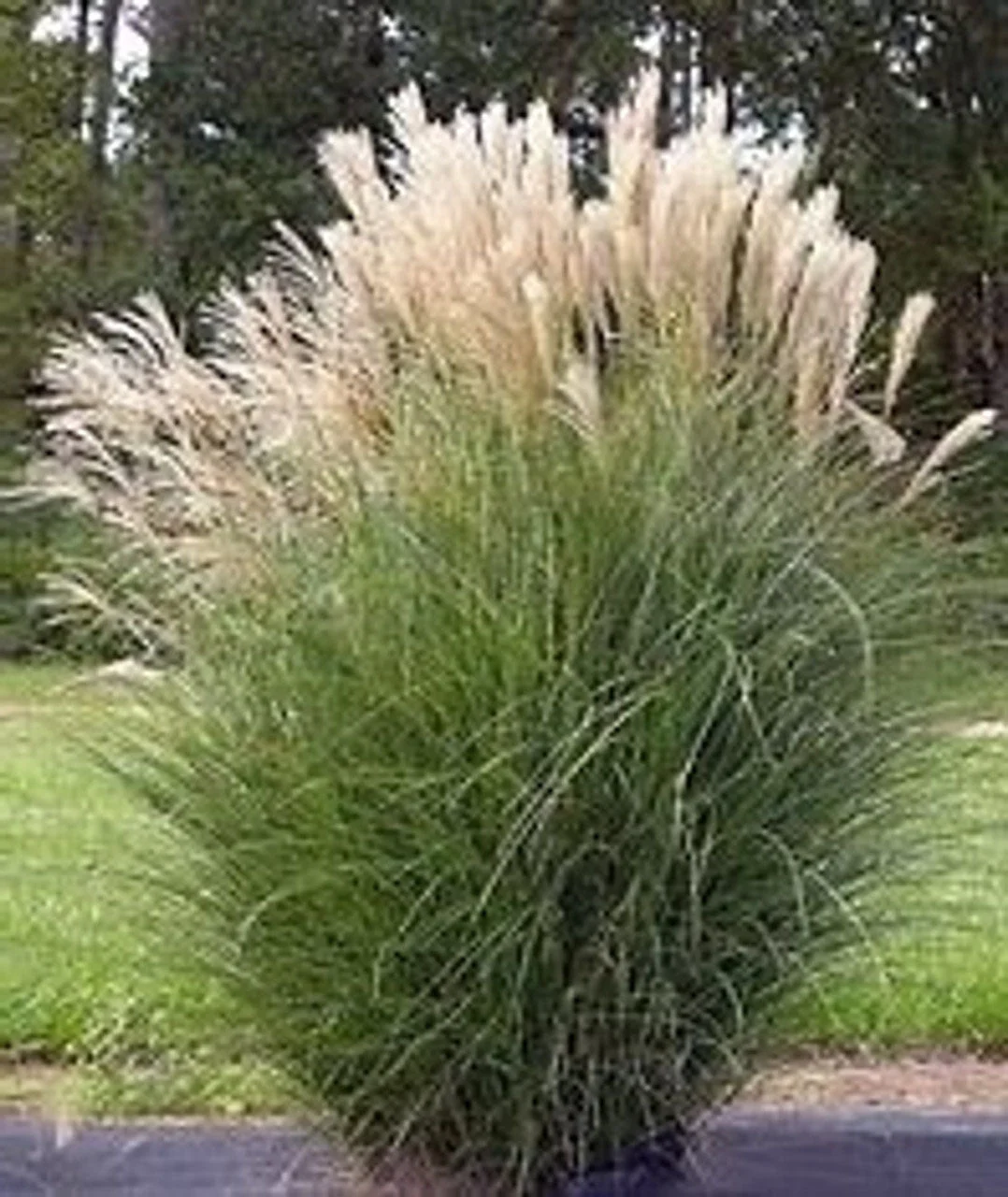
Done badly, the roots fill the pot in two seasons, the mix dries out by afternoon, and the clump stalls. Done well, you get a tall, silvery plume-bearing grass beside your door.
This article talks about growing one Silver Feather Grass in a 20-gallon pot and answers the questions customers ask us most. Read on to learn how to size the pot, mix the soil, plant, water through July, feed lightly, get the pot through winter and divide the clump in year three.
Sizing a Pot for Silver Feather Grass
Picture the plant you are actually potting. In the ground, Silver Feather matures at 7 to 8 feet tall and 4 to 6 feet wide, and most of that width starts as roots and rhizomes (thick underground stems) packed into one dense clump. A standard patio pot holds only a few gallons of mix. That is enough for a season of good looks and not much longer.
Customers usually ask us whether a standard patio pot will do. It will for one summer. By the second, the roots circle the wall, the mix dries out fast, and the clump stops growing.
So work backward from the roots. A larger pot holds more water and more root room. It also buffers the root zone against heat and cold, because a bigger block of mix changes temperature slowly. Our example uses 20 gallons, which is the size class of a half whiskey barrel. Treat that as the minimum for this cultivar, not a comfortable size, and expect a plant shorter than 7 to 8 feet, because the roots set the ceiling. Our size and growth guide shows what the plant does when the roots are free.
Pick a pot about as wide as it is deep, with several drainage holes and sides that flare slightly toward the top. That flare matters in year three, when the root mass has to come out in one piece. Set the pot in its final spot before you fill it, because it will be too heavy to move.
Mixing the Potting Medium Step by Step
Fill a wheelbarrow, not the pot. Mixing outside lets you see the blend and fix it before roots depend on it. For our 20-gallon example, we use 3 parts bagged potting mix, 1 part compost and 1 part coarse grit or perlite, measured by volume. That works out to about 12 gallons, 4 gallons and 4 gallons.
Each part changes something you can measure in the plant's behavior:
- Potting mix, peat or coir based, holds water and stays light, so roots can push through it without a fight.
- Compost adds a small reserve of nutrients and feeds soil life, which is why you can feed lightly later.
- Coarse grit or perlite makes large pores, the air spaces that let roots take in oxygen. Roots suffocate when those pores stay full of water.
Leave garden soil out. Its fine particles pack down in a container and hold a soggy layer at the base, called a perched water table (water that sits above the drainage holes because tiny pores grip it). A Silver Feather wants moist but well-drained ground, and a soggy base gives it the first without the second.
For the same reason, skip the layer of gravel or broken pot at the bottom. Water will not leave fine mix until the mix is saturated, so the layer only steals root room and raises the wet zone.
You do not need to chase pH. This cultivar tolerates acid, neutral and alkaline soil, so a standard mix works. Our soil guide covers the in-ground side of this.
Planting One Silver Feather Grass in Twenty Gallons
The crown is the point where the shoots meet the roots, and on a Silver Feather it must stay at the surface. A crown set too deep stays wet and can rot, which we often see in the first season. In our example there is one plant in one pot, set at the depth it grew at before.
- Half fill the pot with your mix, with the pot already in a spot that gets full sun.
- Slide the plant from its nursery pot and loosen any circling roots with your fingers.
- Set the root ball on the mix and adjust until the crown sits at its nursery depth, with the mix surface a little below the rim so water has a gap to collect in.
- Backfill around the root ball, pressing with your hands rather than stamping.
- Water slowly until it runs from the holes, wait for the mix to settle, then top up around the plant without covering the crown.
Expect the mix to sink after that first soaking. Topping it up now is far easier than lifting the plant later. A young plant from our farms is easier to settle than a big old clump, because there is less root to fit into the pot.
Do not stake it. A Silver Feather stands upright on its own, and a plant that leans in its first summer is telling you about water or feed, not about wind. Give it a few weeks before you judge how it is rooting.
How the Pot Changes Watering in July
On a July afternoon, push a finger into the bed beside your patio and then into the pot. The bed is usually damp at knuckle depth. The pot may be dry well below that. The difference is volume and exposure. The pot holds only 20 gallons, its walls take sun and wind from every side, and it has no deeper soil to draw from.
A mature Silver Feather also carries a great deal of leaf, and leaves release water into the air all day (transpiration). In the ground, deep roots forgive a missed week more often than not. In a pot, a missed day in a heat wave shows up as rolled, pale leaves.
Set a rhythm by testing, not by the calendar. When the top knuckle of mix feels dry, water slowly until it runs from the holes, then stop. In July, once the roots fill the pot, expect that to mean every other day, and daily in a heat wave. We cannot give you a fixed number, because pot material, wind and plant size all shift it.
Water in the morning, and keep the pot out of standing water. A light-colored pot stays cooler than a black plastic one, and a layer of bark on top slows evaporation. Roots sitting in saturated mix lack oxygen, which is the same problem we fixed with grit. Our watering guide covers the in-ground schedule.
Feeding Lightly Without Burning Roots
A potted Silver Feather that sprawls sideways in August is often a plant that was fed too well. Nutrients in a pot are a fixed stock, and each draining watering washes some out, so it is tempting to keep topping up. Excess nitrogen drives fast, soft growth, and soft stems cannot hold a plant that wants to stand 7 to 8 feet.
The other failure is salt burn. Fertilizers are salts, and when a pot is never flushed they build up in the mix. A salty mix pulls water out of roots instead of letting it in, and you see brown, crisp leaf tips even though you watered.
Our mix already holds compost, so the plant starts with a reserve. Once in spring, as growth begins, scratch in a slow-release granular fertilizer at no more than the lowest rate on the label. Skip feeding through the second half of summer, so the plumes and stems firm up instead of stretching.
Every so often, give the pot one long, slow soak so water flushes through and carries salts out of the drainage holes. If a plant looks pale or small, check water and root space before you reach for fertilizer, because both are more likely causes. Our fertilizing guide explains why this grass asks for so little. If you want a firm number for your mix, check with your local extension service.
Wintering a Potted Silver Feather Grass
In the ground, this cultivar is rated hardy from zone 4a through 9b. In a pot, the same roots sit in a small block of mix exposed on every side, and Iowa State notes the mix can drop into the single digits when a container stays above ground in winter. A rating for the ground does not carry over to a pot.
A usual rule is to choose container plants rated for two zones colder than yours. A zone 4 rating clears zone 6 on that rule. If you garden in zone 5 or colder, give the pot protection. The table below compares three options.
| Option | What to do | How it fares |
|---|---|---|
| Unheated garage or shed | Move the pot in once the plant is dormant, in a space that stays between 20 and 45°F. | Safest choice in the coldest zones. |
| Pot buried in a bed | Sink it to the rim, then after dormancy cover with 6 to 12 inches of straw, pine needles or other loose mulch. | Good insulation, but hard work with 20 gallons. |
| Pot left on the patio | Push it against a sheltered wall and wrap the sides. | Highest risk, since the mix can chill the roots hard. |
Whichever you choose, water the pot well before the hard freeze, because moist mix freezes more slowly than dry mix. In a shed, water lightly now and then so the mix never goes bone dry. Leave the stems standing, then cut them back in early spring before new growth appears.
Dividing and Repotting Silver Feather Grass in Year Three
Tip the pot in the third spring and the roots tell the story. You find a solid mat that holds the pot's shape, white roots circling the wall, and often a thin or dead patch at the center. Missouri Extension says a maiden grass clump needs dividing every third or fourth year to keep the center from dying, and a confined clump reaches that point sooner than one in open ground.
Watch for these signs between divisions:
- Water runs straight through the pot instead of soaking in.
- The center of the clump sinks or thins while the edges stay green.
- Roots push up through the drainage holes or lift the plant.
Divide in early spring, as spring division before growth resumes suits warm-season grasses like Miscanthus. That is also when you cut the old stems back. Lay the pot on its side and slide the clump out, cutting the pot if you must. Saw or spade the mass into sections, discard the woody dead center, and keep outer pieces with healthy buds.
Make fresh mix from the same 3:1:1 recipe and replant one good piece at its old crown depth. Old mix has lost structure and carries leftover salts, so dig it into a bed rather than reusing it. Extra pieces can go into other pots or the ground. Our division guide covers the splitting in more detail.
What the Finished Pot Teaches About Silver Feather Grass
Add up the example. One plant, one 20-gallon pot, a mix of three parts potting mix to one each of compost and grit, watering every other day or daily in July, one light feeding in spring, one winter move or burial, and a division every third or fourth year. None of it is difficult, but it never stops, which is where this plant differs from its compact cousins.
That effort is the real answer. Silver Feather is a 7 to 8 foot grass, and a pot caps both its size and your free time. We call it a good short-term and medium-term container plant and a poor permanent one. If you want a pot you can leave for years, choose a compact cultivar such as 'Adagio' or 'Little Kitten', and give Silver Feather a place in the ground.
Silver Feather Grass
Nursery-grown Silver Feather Grass in sizes from Quart Plant, shipped to your door.
From $49.49
Shop Now →Silver Feather stands tall in our rows with six or more hours of sun and soil that holds moisture yet drains freely, and that is the same setup a big pot needs from you. Every plant we sell, whether a tree, shrub or grass, was grown start to finish on our own farms. If you would like to try a clump in a container of your own, have a look at what is in stock now.