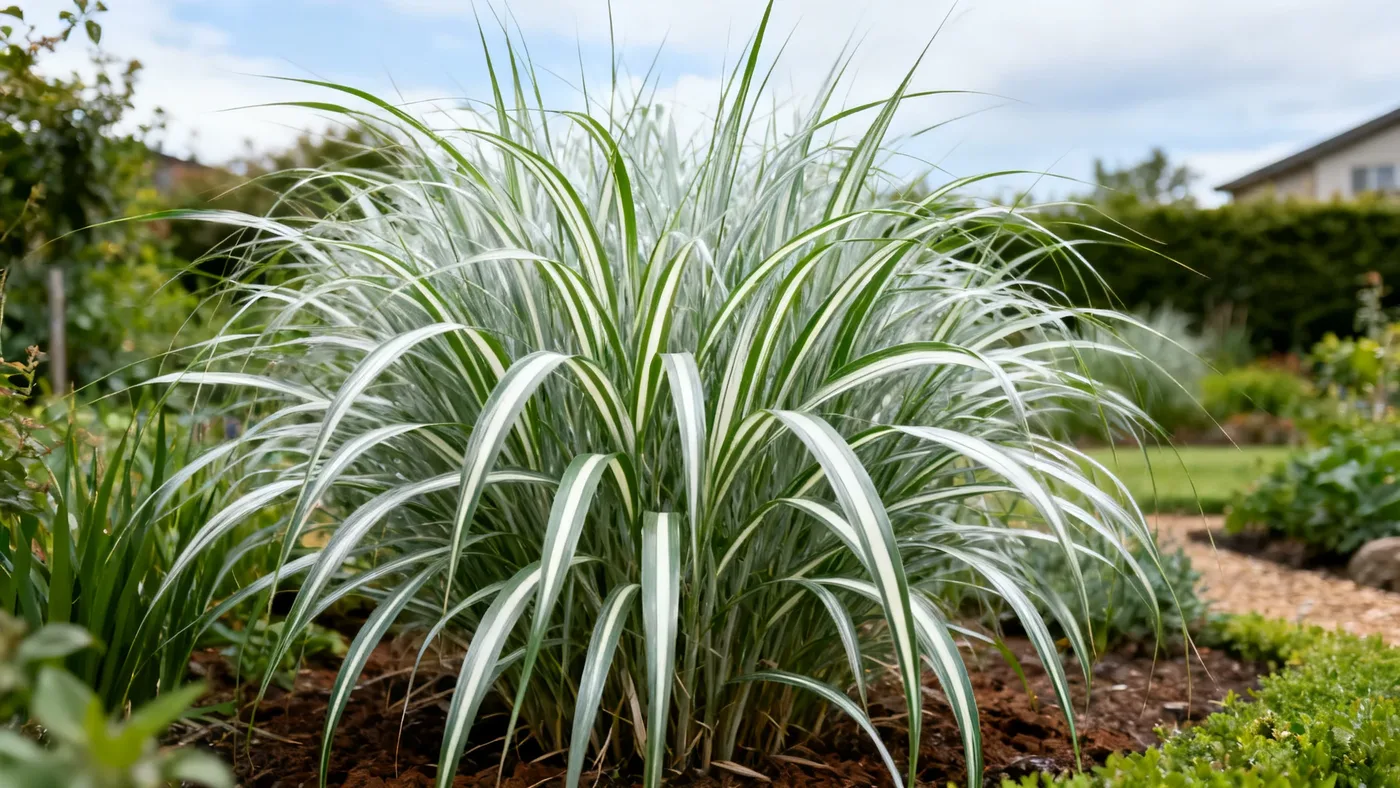
Best Soil for Silver Feather Grass: Drainage and pH Needs
Silver Feather Grass is remarkably forgiving when it comes to soil. Unlike many ornamental grasses, it adapts well to clay, loam, and other common garden soils. But "adaptable" does not mean "any soil will do." The difference between a thriving, upright clump and one that flops or struggles to establish comes down to a few key soil properties: drainage, pH, and nutrient balance. This guide walks you through testing your soil, amending it if needed, and planting your Silver Feather Grass for success.
Why Soil Matters for Silver Feather Grass
Silver Feather Grass (Miscanthus sinensis 'Silberfeder') will establish faster and grow stronger when planted in soil that drains well and stays consistent in moisture during the first year. Poor drainage leads to root rot; overly rich soil packed with nitrogen causes weak, floppy stems that cannot support the plant's mature height of 6 to 8 feet. Correct pH and structure give the roots confidence to anchor deep, setting the stage for the 1 to 3 feet of growth per season you can expect once the plant is established.
The good news: you do not need a specialized mix. The bad news: skipping soil prep is one of the most common reasons Silver Feather Grass underperforms in the first year.
Understanding Your Plant's Soil Needs
Drainage is the Priority
Silver Feather Grass prefers moist but not waterlogged soil. This is the single most important factor. If water pools around the crown for hours after rain, roots will rot before the clump has a chance to establish. The plant tolerates well-drained clay, but it cannot survive standing water. If your site tends to stay soggy, you must amend before planting or consider a raised bed.
pH Range: 5.5 to 7.5
This is a wide, forgiving window. Most garden soils fall somewhere in this range naturally. Unless you know your soil is very acidic (below 5.5) or very alkaline (above 7.5), pH is rarely a limiting factor. A soil test costs less than a bag of mulch and tells you exactly where you stand.
Fertility: Less Is Better
Silver Feather Grass is a light feeder. Overly rich soil or excess nitrogen causes the stems to become weak and floppy. Balanced spring fertilizer is optional; most gardens do not need it at all. Lean soil actually produces stiffer, more upright plants with better winter structure.
Materials and Amendments You May Need
Not every garden will need all of these. Start with a soil test to know what you are working with.
- Soil test kit or professional lab analysis
- Coarse sand or gritty compost (if drainage is poor)
- Peat moss or coconut coir (to improve water retention and lighten clay)
- Perlite or pumice (for drainage in heavy soils)
- Agricultural lime (if soil pH is below 5.5)
- Sulfur (if soil pH is above 7.5)
- Balanced fertilizer such as 10-10-10 (optional, use sparingly)
- Mulch, ideally 1 to 2 inches of bark or straw
- Water source for thorough watering after planting
Step-by-Step Soil Preparation
Step 1: Test Your Soil
Contact your local extension service or use a home soil test kit to measure pH, texture (clay, silt, sand percentages), and basic nutrients. Knowing your starting point saves time and money. You may discover your soil needs less amendment than you thought.
Step 2: Assess Drainage
Dig a hole about 12 inches deep and 6 inches wide. Fill it with water and let it drain completely, then fill it again. If water drains within 4 hours, drainage is adequate. If it takes more than 8 hours, plan to amend.
Step 3: Amend for Drainage (If Needed)
For heavy clay or compacted soil, work 2 to 4 inches of coarse sand, perlite, or gritty compost into the top 6 to 12 inches of soil. Do not just dump it on top; mix it in so air pockets are distributed throughout the root zone. This opens the soil and reduces waterlogging risk.
Step 4: Adjust pH (If Needed)
If your soil test shows pH below 5.5, add agricultural lime according to the test results (typically 50 to 100 pounds per 1,000 square feet; follow your lab's recommendation). If pH is above 7.5, elemental sulfur can lower it, but changes take time and need reapplication. Fortunately, Silver Feather Grass rarely requires this step unless your soil is extremely alkaline.
Step 5: Add Optional Balanced Fertilizer
If your soil is very lean (poor in nitrogen, phosphorus, or potassium), a light application of balanced 10-10-10 fertilizer mixed into the planting hole helps without overfeeding. One handful per 5-gallon planting area is plenty. Resist the urge to go heavy; weak stems are a sign of too much nitrogen, not too little.
Step 6: Prepare the Planting Hole
Dig a hole slightly wider and equally deep to the root ball of your nursery-grown plant (usually a quart, number 1, or number 3 container). Loosen the sides of the hole so roots can penetrate. Do not smooth the bottom; a rough floor helps drainage.
Planting Steps
Step 1: Position the Plant
Place the Silver Feather Grass in the hole so the top of the root ball is level with the soil surface. Planting too deep can cause crown rot; too shallow exposes roots to air. Center the plant and eye it from multiple angles.
Step 2: Backfill and Firm
Fill the hole with amended soil (the same mix you used for amendment, if you amended). Press gently but firmly to eliminate large air pockets, then water deeply to settle the soil around the roots.
Step 3: Mulch and Water
Apply 1 to 2 inches of bark mulch or straw around the base, keeping it 3 to 4 inches away from the crown to prevent rot. Water thoroughly after planting and keep the soil consistently moist (not soggy) during the first growing season. This is when the clump is building its root system and growing slowly.
Tips for Success
- Spring planting is best. Plant after the last frost to give your clump a full season to establish roots before winter.
- Spacing matters. Space plants 3 to 4 feet apart so mature clumps (each reaching 3 to 4 feet wide) do not crowd each other.
- Water the first year. Although the mature plant is drought tolerant (after 2 to 3 growing seasons), new plantings need consistent moisture until roots are deep.
- Mulch protects. A mulch layer keeps roots cooler, retains moisture, and moderates soil temperature swings during establishment.
- Avoid overfertilizing. Once established, a single spring application of balanced fertilizer is optional; most gardeners skip it entirely and see better results.
Common Mistakes to Avoid
- Planting in pure clay without amendment. Silver Feather Grass can tolerate clay, but only if it drains well enough. Test drainage first.
- Planting too deep. The crown should sit just at soil level. Burying it invites rot.
- Overapplying nitrogen fertilizer. This causes weak, floppy stems that cannot hold themselves upright. Lean soil produces sturdier plants.
- Neglecting water during year one. The plant will not establish quickly in dry soil during its first season. Once roots are deep (2 to 3 years in), drought tolerance kicks in.
- Assuming "adaptable" means "no prep required." Soil prep takes a few hours and pays back tenfold in plant vigor.
Expected Results
A Silver Feather Grass planted in well-prepared soil typically establishes faster and grows more vigorously than one planted in unprepared ground. In the first year, you can expect modest growth as the clump focuses on root building, usually reaching 2 to 3 feet tall. By year two, the plant should be noticeably larger. By year three, you will see the full mature form: a dense clump 3 to 4 feet wide and tall, with silvery flower plumes rising 2 to 4 feet above the foliage in late summer and fall. Properly drained and amended soil supports this progression without the stem weakness that occurs in overly rich soil.
For more care and maintenance guidance, see the complete growing guide for Silver Feather Grass.
Quick Reference Checklist
| Task | Timing | Notes |
|---|---|---|
| Soil test | Before planting | Check pH (target 5.5-7.5) and drainage |
| Drainage test | Before planting | Water should drain within 4-8 hours |
| Add sand/perlite | Before planting (heavy soil only) | 2-4 inches mixed into top 6-12 inches |
| Adjust pH (if needed) | Before planting | Lime to raise, sulfur to lower; follow test results |
| Optional fertilizer | At planting | Light application only; lean soil is preferred |
| Plant | Spring, after last frost | Crown level with soil surface; space 3-4 feet apart |
| Mulch | At planting | 1-2 inches; keep 3-4 inches from crown |
| Water consistently | Year one | Moist but not waterlogged; reduced after 2-3 seasons |