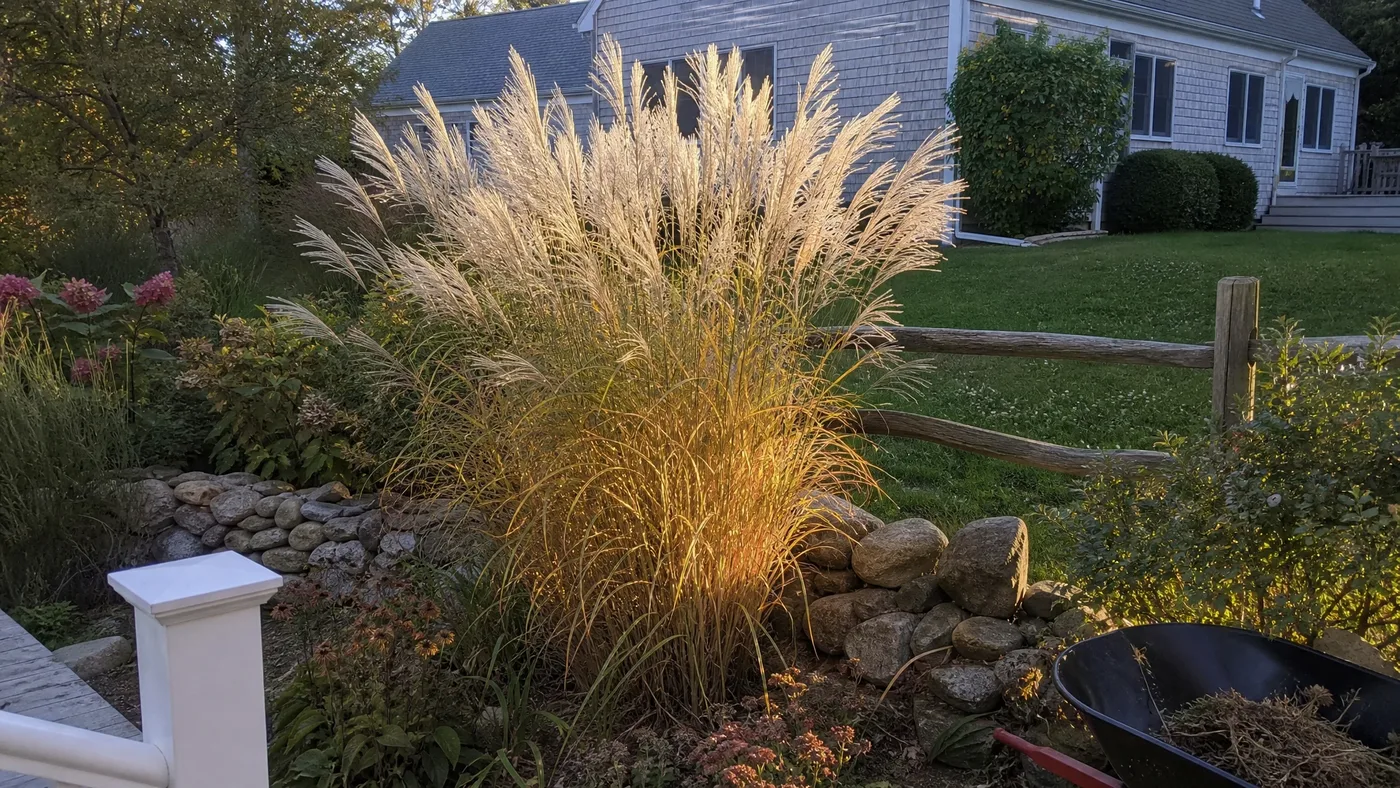
Is Silver Feather Grass Invasive? Seed Spread and Legal Status
Somebody at the fence line says, "That stuff is banned, isn't it?" and everyone nods. Then someone asks where they heard it, and nobody can say. That is how most claims about Silver Feather Grass travel: secondhand, confident, and short on sources.
The topic matters because both mistakes cost something. Plant it blindly where Miscanthus escapes and you add to a real problem. Skip it on rumor and you give up one of the best tall grasses for late-summer plumes. Read on for what the seed evidence shows, how this cultivar differs from its species, which states have actually acted, and what a "sterile" label can and cannot promise.
Does Silver Feather Grass Really Seed Everywhere?
The belief is that a single clump will fill your beds and the neighbor's with seedlings. The best evidence points the other way for a lone plant. Miscanthus is self-incompatible, so one plant grown in isolation usually cannot develop seed. A single Silberfeder with no other Miscanthus within wind range is mostly making plumes for show.
The catch is the word "isolation." Seed needs a second cultivar or species nearby, and plenty of yards have one, or a neighbor does. That is where the sources split. NC State's plant database says Silver Feather is considered sterile and does not spread aggressively. Washington's plant library, writing about Miscanthus generally, warns that many are self-seeding.
We have not found a source that counts viable seed from this cultivar, so we do not lean on the sterile label. Our position: treat Silberfeder as able to set seed when another Miscanthus is close, and plan around that. "Seeds everywhere" fails the evidence. So does "never seeds."
The plant also does not run underground the way a bamboo does. It grows as a clump at a medium rate, reaching 4–6 feet wide at maturity, and it fills out slowly enough that spread is easy to watch.
The Belief That All Miscanthus Behaves Alike
Lumping every Miscanthus together is the second rumor, and it muddies almost every conversation. All documentation of invasiveness, naturalization and self-seeding to date concerns the species, not the cultivars. The wild species, Miscanthus sinensis, is what shows up in the warnings. A named cultivar is one selection with its own habit.
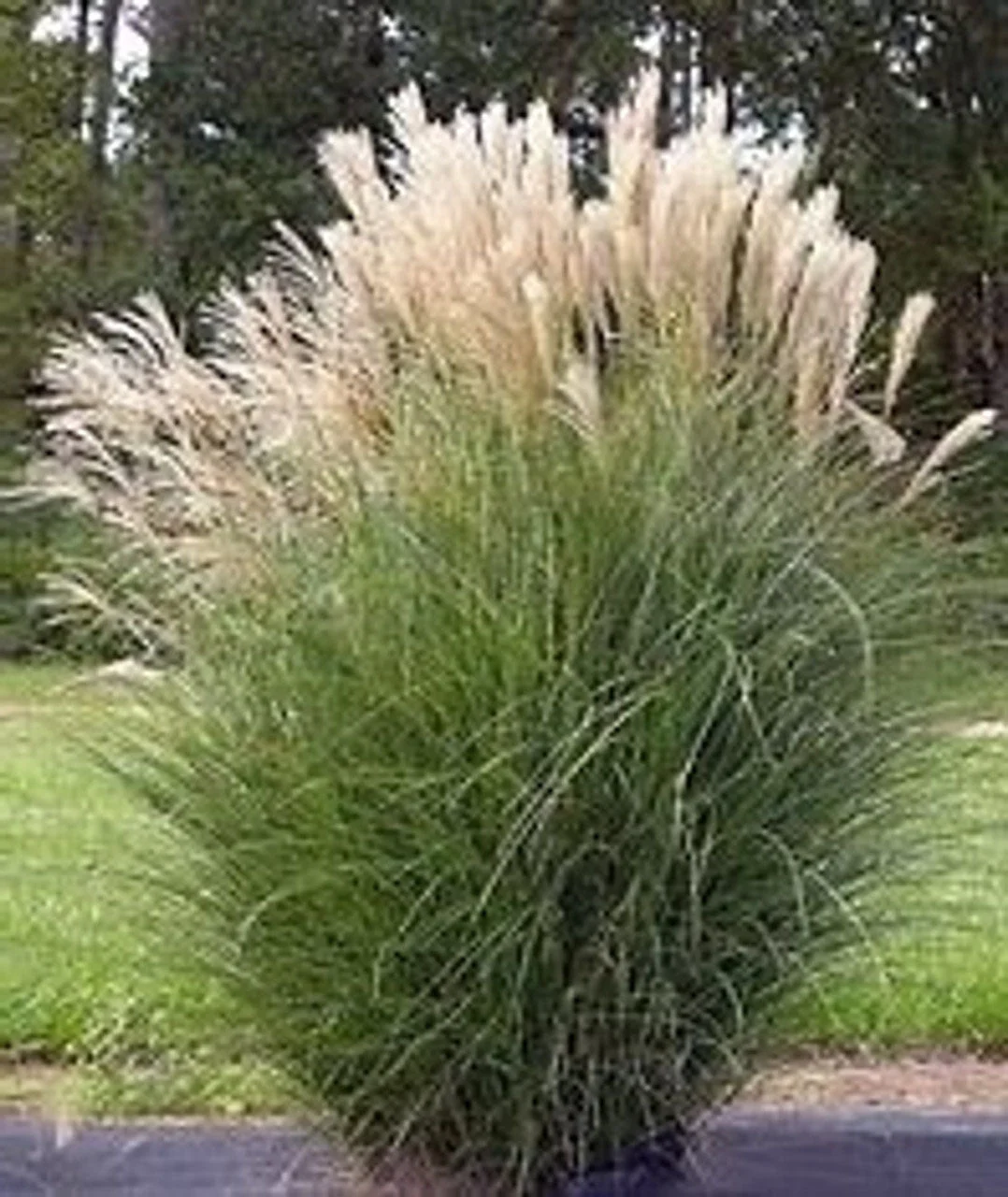
Silberfeder is a clear example of a cultivar that differs from its species. It grows 7–8 feet tall, while the species runs 4–12 feet. It is rated hardy in zones 4a–9b, where the species is listed at 5a–9b. Its plumes open pinkish-silver in late summer, giving the grass its name.
The differences that matter here are narrower than the marketing suggests. Silberfeder is an older selection, not one of the newer sterile releases. That is why we do not treat "it's a cultivar" as a pass, and why we would not call it the same as the sterile selections. Our comparison of Silver Feather with other Miscanthus covers how the look and habit differ. For the naming tangle, see Silberfeder and maiden grass.
Where Silberfeder Seedlings Actually Turn Up
Seedlings of the species show up in open, sunny ground with moist soil. Michigan's invasive species fact sheet says Chinese silvergrass grows in open, sunny places and does best on moist but well-drained soils. The species invades high-quality grasslands and forms aggressive colonies. Western North Carolina is the example extension specialists keep naming.
That pattern tells you the risk map. Mild, wet regions with long growing seasons give seed the best odds. Unmanaged edges next to a planting give seedlings room to establish. The usual escape route is a mature plant, a second Miscanthus nearby, and an untended boundary.
Managed beds are different. Mulched, weeded and cut back annually, they leave seedlings little chance to establish. We also have to be straight about the gap: we found no source that documents self-sown Silberfeder seedlings by name or counts them. Most of the record is species-level, and the cultivar-level evidence is thin.
The practical reading is simple. If your property edge touches a meadow, a woodland margin or open wet ground, your risk is higher than for a courtyard bed. If you want to see what a seedling would mean for your own plants, our guide on growing Silver Feather Grass from seed covers what seed-grown plants look like.
Claims About Silver Feather Grass Being Banned Nationwide
There is no nationwide ban on this plant in anything we found. Regulation of plants like this happens state by state, and usually it targets the species or sales of it, not each cultivar by name. Customers usually ask us whether it is banned before they ask how tall it gets, and the honest answer is "not everywhere, not by blanket rule."
What regulators have actually said is more modest than the rumor. Extension guidance in places where Miscanthus has escaped advises restraint. In areas such as western North Carolina, where Miscanthus has become invasive, it is wise to limit and restrict any planting. That is advice, not a statute.
The rumor also tends to blur "discouraged," "monitored" and "banned." These are different levels of action, and treating them as one is how a mild caution turns into "that stuff is banned." If someone tells you it is illegal where you live, ask which agency said so. The answer settles it quickly.
Which States Restrict Miscanthus Sinensis
The sources we checked point to a patchwork. The table covers what they say, and it is not a complete national list.
| Place | What the source says |
|---|---|
| New York | Regulates the sale of miscanthus, with exceptions for sterile hybrids recently developed. |
| Western North Carolina | Extension advises limiting and restricting any Miscanthus planting. |
| Washington | Naturalized plants were collected, and the State Noxious Weed Board has had Miscanthus sinensis on its monitor list since 2014. |
| New Jersey | Rutgers' environmental stewards program featured silver grass as an invasive species of the month. |
New York's rule is the one worth reading closely. New York State regulates the sale of miscanthus with exceptions for sterile hybrids. The exception is for sterile hybrids, which is a different thing from an older cultivar with a "considered sterile" note.
How to Verify Your Local Rules
Start with your state department of agriculture and your state invasive plant council. Both publish lists, and the lists change. Your county extension office can tell you whether Miscanthus sinensis is regulated, monitored or only discouraged where you live. Check the date on any list. A page from several years ago may be out of step with current rules. Don't rely on a retailer's note or a forum post, in either direction.
Sterile Silver Feather Grass and Other Promises
"Sterile" is the claim we trust least without paperwork. For this grass it appears on plant labels, in catalog copy and in database entries, usually without saying how it was tested. NC State's wording is careful: "considered sterile." That is a rating, not a measured result for every plant in every yard.
The wider point is that sterility is a property of how a cultivar was bred and tested, and it can be undone by neighbors. A truly sterile selection stays seedless next to any other Miscanthus. A seed-fertile one may only look sterile when it is grown alone, because of the self-incompatibility the Minnesota program describes. A buyer cannot tell the two apart from a pot.
What you can verify before buying:
- Ask whether the seller can name a source for the sterility claim, not just repeat the label.
- Check whether your state's sales rules treat sterile hybrids differently, as New York's do.
- Look at what grows within wind range of your planting spot, yours and the neighbors', since a second Miscanthus is what makes seed possible.
- Confirm the plant's name on the tag matches Miscanthus sinensis 'Silberfeder', so you know which record you are checking.
If a promise cannot be checked, treat it as marketing. A plain "we don't know" from a grower beats a confident "guaranteed seedless."
Judging Silver Feather Grass by the Evidence
Put the beliefs on a scale. "It's banned everywhere" does not hold: we found no nationwide ban. "All Miscanthus behaves alike" does not hold: the documented problems belong to the species. "It seeds everywhere" does not hold for a lone plant, given self-incompatibility. "It's sterile, so forget about it" is not safe either, because the sources conflict and nobody has published a count for this cultivar.
What survives is a measured stance. In a managed bed, with no other Miscanthus nearby, Silver Feather is a low-risk plant. Near open ground in a mild, wet region, or near other Miscanthus, the risk is real and worth planning for.
Planting It Responsibly
Keep the plumes from dropping seed. Cutting back before the seed releases is the simplest control, and our guide on when and how to cut back Silver Feather Grass covers timing. Pull any stray seedling while it is small. Put the clump where it faces a mown lawn or paved edge, not a meadow. Keep it away from other Miscanthus when you can, since that second plant is what turns plumes into seed.
Spread by division is another matter. Divided clumps are clones that do not need a second parent, and our guide on propagating by division shows how to share them safely.
Plant It With Eyes Open, Not Afraid
The verdict: Silver Feather Grass is not banned nationwide, and the strongest invasiveness evidence concerns the species, not this cultivar. It is an older selection that may set seed if another Miscanthus is close, so the sterile label is not a guarantee. In a managed bed it behaves. At a wild edge in a mild, wet region, take more care.
Before you plant, make one check: ask your state agriculture department or county extension office whether Miscanthus sinensis is regulated or restricted where you live. That one call replaces the rumor at the fence.
Silver Feather Grass
Nursery-grown Silver Feather Grass in sizes from Quart Plant, shipped to your door.
From $49.49
Shop Now →Raising Silver Feather on our farms means giving it a sunny spot and soil that stays moist but drains well, which keeps the clump tall and upright. Every tree, shrub and grass we sell, this one included, is grown by us on those same farms. If this guide has you ready to plant it with confidence, our shop lists the clumps we can send this season.