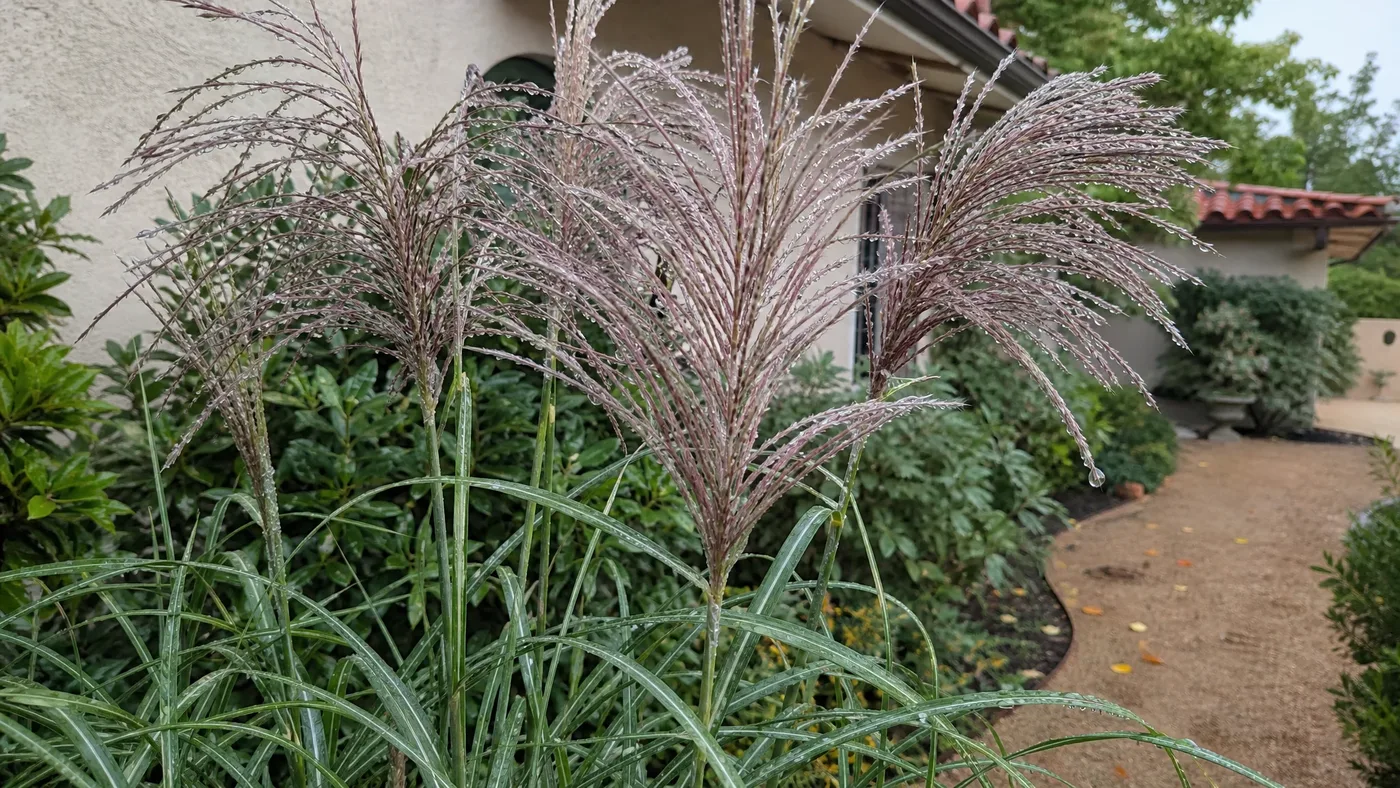
Silver Feather Grass Synonyms: Silberfeder and Maiden Grass
Open a plant catalog from decades ago and you may find a German listing for 'Silberfeder', pencilled in the margin with a grower's notes, and a few pages later the same grass under another name entirely. That habit of one clump wearing several labels has followed this plant ever since.
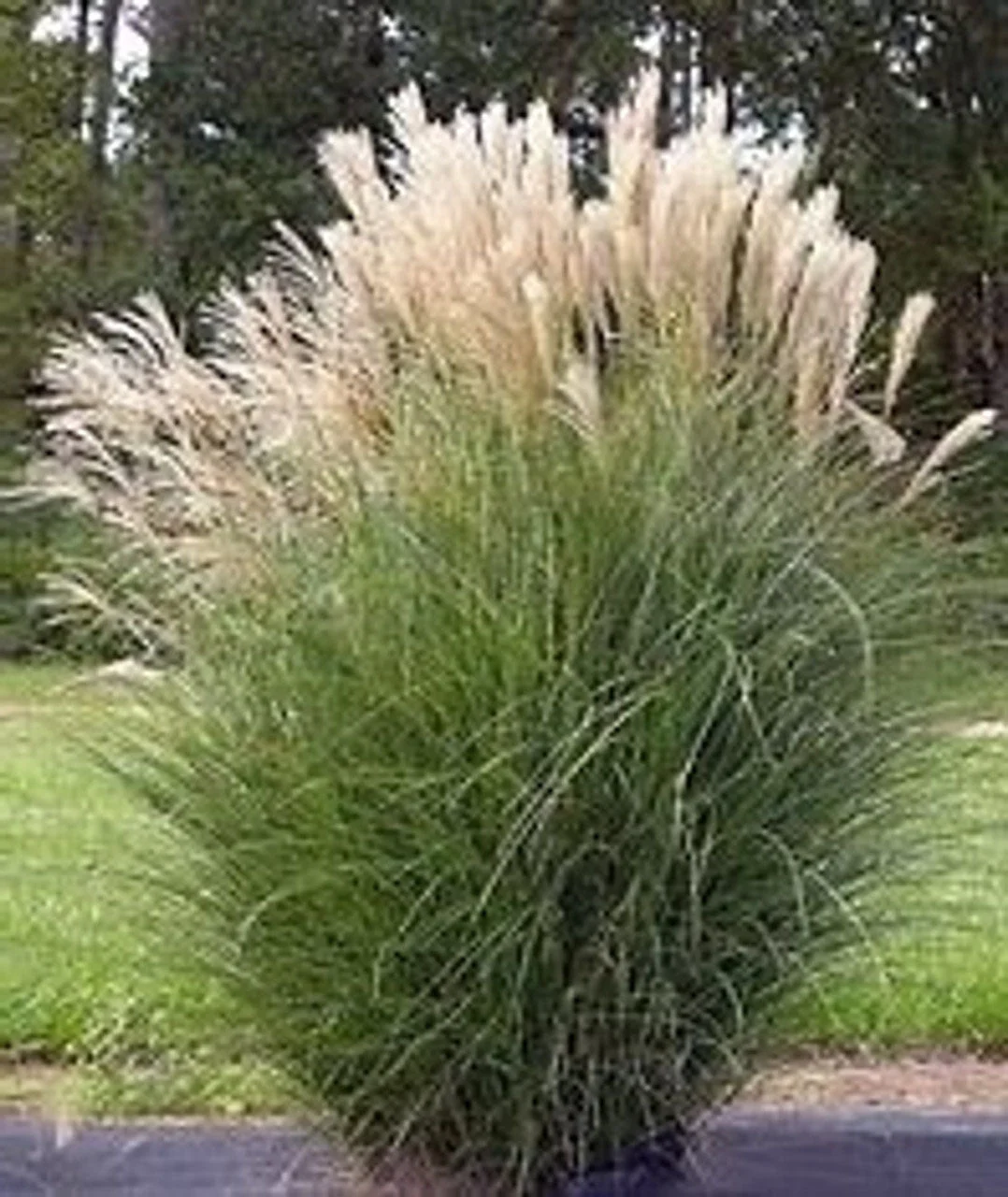
Today it turns up as Silver Feather, Silver Feather maiden grass, Chinese silver grass and Japanese silver grass, and a search on any one of those can land you on a different plant than the one you meant. Get it wrong and you may bring home a shorter, seedier cousin instead of the tall, sterile clump with silver plumes.
Below, you'll find out all about the names this grass goes by, including where the cultivar name came from, how the species sits behind it, how German catalogs and nurseries write it, and which names to trust when you buy.
Where Silver Feather Grass Got Its Cultivar Name
A cultivar name is the label that points to one selected plant instead of a whole species, and it sits in single quotes after the botanical name, as in Miscanthus sinensis 'Silberfeder'. Every clump sold under that name is meant to be the same clone, divided and divided again, so two plants carrying the tag should match in height, plume color and habit no matter whose rows they grew in.
That matters because a seedling of the species is a gamble, anywhere in a range of 4 to 12 feet with plumes of uneven quality, while a division of a named selection is a known quantity. In our rows, a block of Silver Feather looks like one plant repeated, which is the cultivar name doing its work.
The history of who first selected it is thinly documented in the sources we trust, so we leave breeders and dates out and stick to what the name itself says. 'Silberfeder' is German for silver feather, and the English name follows the plumes.
Those plumes rise as silver inflorescences over green foliage, emerging pinkish-silver in late summer, as we describe in our guide to bloom time and plumes. The cultivar name is the part of the label that holds still.
The Species Behind Silver Feather Grass
Miscanthus sinensis is a deciduous, clump-forming perennial grass in the grass family, native to Asia, and Silver Feather is one cultivar of it. The species is a loose range of plants rather than a single look, running 3 to 10 feet tall in North America with arching leaf blades and plumes that open anywhere from September through November. A named selection narrows all of that down to one reliable form.
What the Cultivar Inherits
From the species it takes the clumping habit, the arching blades and the need for full sun, at least six hours a day. It also takes the easygoing soil manners: tolerance for acid, neutral and alkaline ground, and for chalk, clay, loam or sand, so long as the spot is moist but well drained.
Care stays simple, with the old foliage and flowered stems cut down in early spring, and pests and diseases rarely trouble it.
Where Silver Feather Departs
The cultivar stands 7 to 8 feet tall and 4 to 6 feet wide, at the tall end of the species range, and it grows at a medium rate, so it builds steadily rather than sprinting. NC State also lists it hardy in zones 4a to 9b, a notch colder than the 5a to 9b given for the species, though you should confirm your zone limits with your local extension service. Our size and growth rate guide covers the numbers in detail.
The biggest difference is behavior. The species is listed as invasive in North Carolina, and cultivars vary in how weedy they are, while Silver Feather is considered sterile and does not spread aggressively. Check local rules for your state anyway, because a sterile cultivar and a regulated species can sit under the same genus name on one tag.
Species facts are a starting point here, and the cultivar's own numbers win wherever they differ.
Silberfeder in German Catalogs and Gardens
'Silberfeder' is the German form of the name, and it is the spelling on tags in German catalogs and gardens, where Silber means silver and Feder means feather. The English 'Silver Feather' is a translation rather than a different plant, so a German border labeled Silberfeder holds the same cultivar we grow as Silver Feather. Nothing in the grass changes at the border, only the label.
The practical use of that is searching. Foreign catalogs often skip English common names entirely, and the botanical string is the one thing that travels between languages. You will also meet trimmed forms such as Miscanthus s. 'Silberfeder' or Miscanthus sin. 'Silberfeder' in older or space-starved listings, and they mean the same species-plus-cultivar pairing. These checks keep a foreign search honest:
- Search the full string Miscanthus sinensis 'Silberfeder', and try Miscanthus 'Silberfeder' if the catalog drops the species.
- Compare the stated height with the cultivar's 7 to 8 feet, remembering that metric listings of about 1.5 to 2.5 meters (roughly 5 to 8 feet) can still be the same plant.
- Look for plumes described as silver or pinkish-silver in late summer, the trait the name promises.
- Ask about import rules before ordering live plants across a border, since your state agriculture office decides what may enter.
Spell Silberfeder exactly and the rest of the search mostly takes care of itself.
How Nurseries List Silver Feather Grass
The same plant can be written four or five ways before it reaches your screen, and the formats tell you more than the spelling does. Nurseries follow habits of their own, so it helps to know what each one is doing before you decide two listings are different plants.
A search on the German spelling can miss listings under the English name and the other way round, so check both before you decide a listing is missing.
Common Nursery Formats
Nursery sites tend to follow one of a few habits: botanical name first, common name first, or a common name with the cultivar tucked into quotes. Read the quoted part. This table shows the forms you are most likely to see and what each one signals.
| How it is written | What it signals |
|---|---|
| Miscanthus sinensis 'Silberfeder' | Full botanical name with the German cultivar name, the most exact form. |
| Miscanthus sinensis 'Silver Feather' | The same species with the English cultivar name. |
| Miscanthus 'Silberfeder' | Species dropped to save space, cultivar name intact. |
| Silver Feather maiden grass | A trade name pairing the English cultivar name with a broad label. |
Some university listings go a step further, and one spells it 'Silberfeder' (Silverfeather) as a single word, noting showy flowers from August through October. That is a spelling choice, not a second plant. Read past the spelling to the facts: 7 to 8 feet, silver plumes, full sun and a clump that stays put.
Maiden Grass and Its Many Cousins
Walk past a row of tags and "maiden grass" will be printed on half of them, because the phrase has drifted from a species name into a shelf label. It covers a family of Miscanthus sinensis cultivars that differ a great deal in size, plume color and bloom timing, and Silver Feather is only one of them.
Maiden Grass on a Tag
"Maiden grass" is a broad trade label for Miscanthus sinensis as a whole, and it gets stretched across many cultivars. 'Gracillimus' is sold under it, and Dwarf Maiden Grass appears among the species' common names, which should make you wary, because Silver Feather is anything but dwarf. Extension sources put the average species plant near 5 feet tall and 5 feet wide, varying between cultivars, so a bare maiden grass tag can hide a clump a good deal smaller than the 7 to 8 feet you pictured.
Silver Feather Maiden Grass
"Silver Feather maiden grass" joins the cultivar's English name to that broad label, and it is the more useful of the two because the cultivar name is in it. Other silver-plumed maiden grasses exist, though, and our comparison of Miscanthus cultivars shows how they differ in height and bloom, so a tag that says only silver is not enough to go on.
Maiden grass names the crowd, and Silver Feather names the plant.
Chinese and Japanese Labels on the Same Plant
Two more words show up in searches, Chinese and Japanese. Both are real names, and neither narrows down the cultivar.
Where the Qualifiers Come From
The species carries both, along with maidengrass, eulalia and susuki, according to NC State's list of its common names. Different books and nurseries simply picked different ones, so Chinese silver grass and Japanese silver grass describe the same Asian species, not two plants from two countries.
Chinese silver feather grass and Japanese silver feather grass are mashups that bolt a regional species label onto the cultivar's English name. One of the most common questions we get is whether they are different plants from Silver Feather, and our answer is that they are search habits more than names.
What They Leave Out
Neither qualifier tells you where a plant was grown, how tall it will get or which cultivar you have, because a bare Japanese silver grass tag could sit on any cultivar of the species. They say nothing about cold hardiness either. For Silver Feather the listed range is zones 4a to 9b, and our hardiness guide explains how to read the colder end of it.
Ask for the botanical name. If the seller can write Miscanthus sinensis 'Silberfeder' or 'Silver Feather', the Chinese or Japanese in front of it is decoration.
Names to Trust When Buying Silver Feather Grass
By now the pattern should be clear: some names point to the exact plant and some point only to the species. Here are the names we trust, from most precise to least.
- Miscanthus sinensis 'Silberfeder' is the most exact form, a full botanical name with the German cultivar name, and it signals a named clone rather than a seedling.
- Miscanthus sinensis 'Silver Feather' is the same pairing in English, and it signals the same cultivar under its English name.
- Silver Feather Grass and Silver Feather maiden grass are trade names, and they signal the right plant as long as 'Silver Feather' appears whole.
- Maiden grass, Chinese silver grass and Japanese silver grass signal only the species, so they need a cultivar name beside them before you buy.
With the name settled, check the plant against the cultivar: 7 to 8 feet tall and 4 to 6 feet wide at maturity, silver plumes that open pinkish in late summer, full sun and a sterile habit. Our buying guide on choosing a size picks up from there.
Keep the Full Name With Your Silver Feather Grass
Silberfeder and Silver Feather are one cultivar of Miscanthus sinensis in two languages, so search both. Maiden grass, Chinese silver grass and Japanese silver grass describe the species, and they only mean Silver Feather when the cultivar name rides along.
In our rows we write the full name on a stake the day a clump goes in, because a plant that is clearly labeled on planting day is the one nobody argues about years later. Do the same with yours: Miscanthus sinensis 'Silberfeder', also sold as 'Silver Feather', written out in full.
Silver Feather Grass
Nursery-grown Silver Feather Grass in sizes from Quart Plant, shipped to your door.
From $49.49
Shop Now →Silver Feather does its best on our farms with full sun and soil that stays damp but never soggy, and we cut it back each early spring so the pinkish-silver plumes come in clean by late summer. Every tree, shrub, grass and plant we sell was raised on those same farms, start to finish. Whether you know it as Silberfeder or as maiden grass, you can pick out a clump from the grasses we are growing this year.