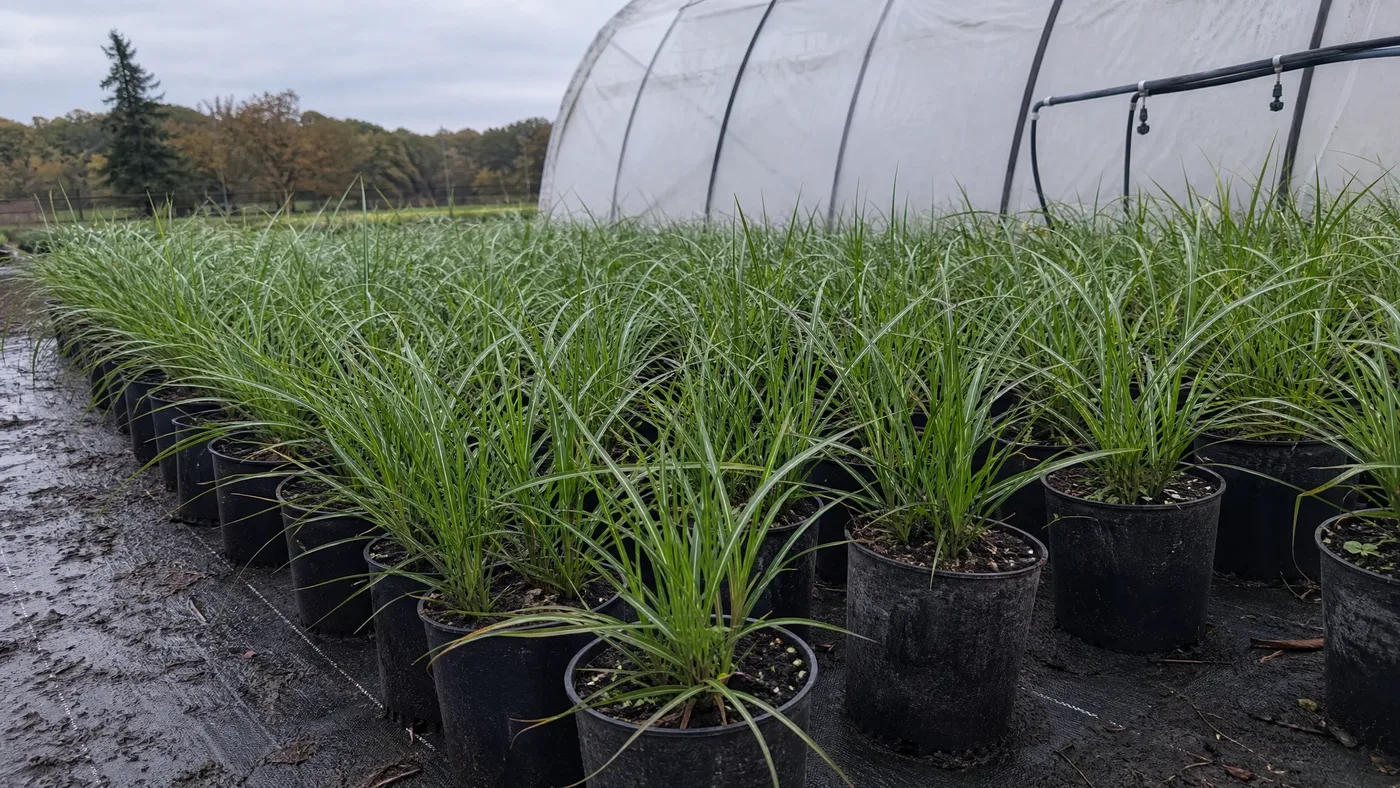
Can You Grow Silver Feather Grass From Seed?
A packet labeled Silver Feather Grass sits on the rack for a few dollars, and a hundred seeds sounds like a hundred plants. It is not. Silver Feather is a named cultivar, Miscanthus sinensis 'Silberfeder', and a cultivar is a single clone. Seed does not copy it.
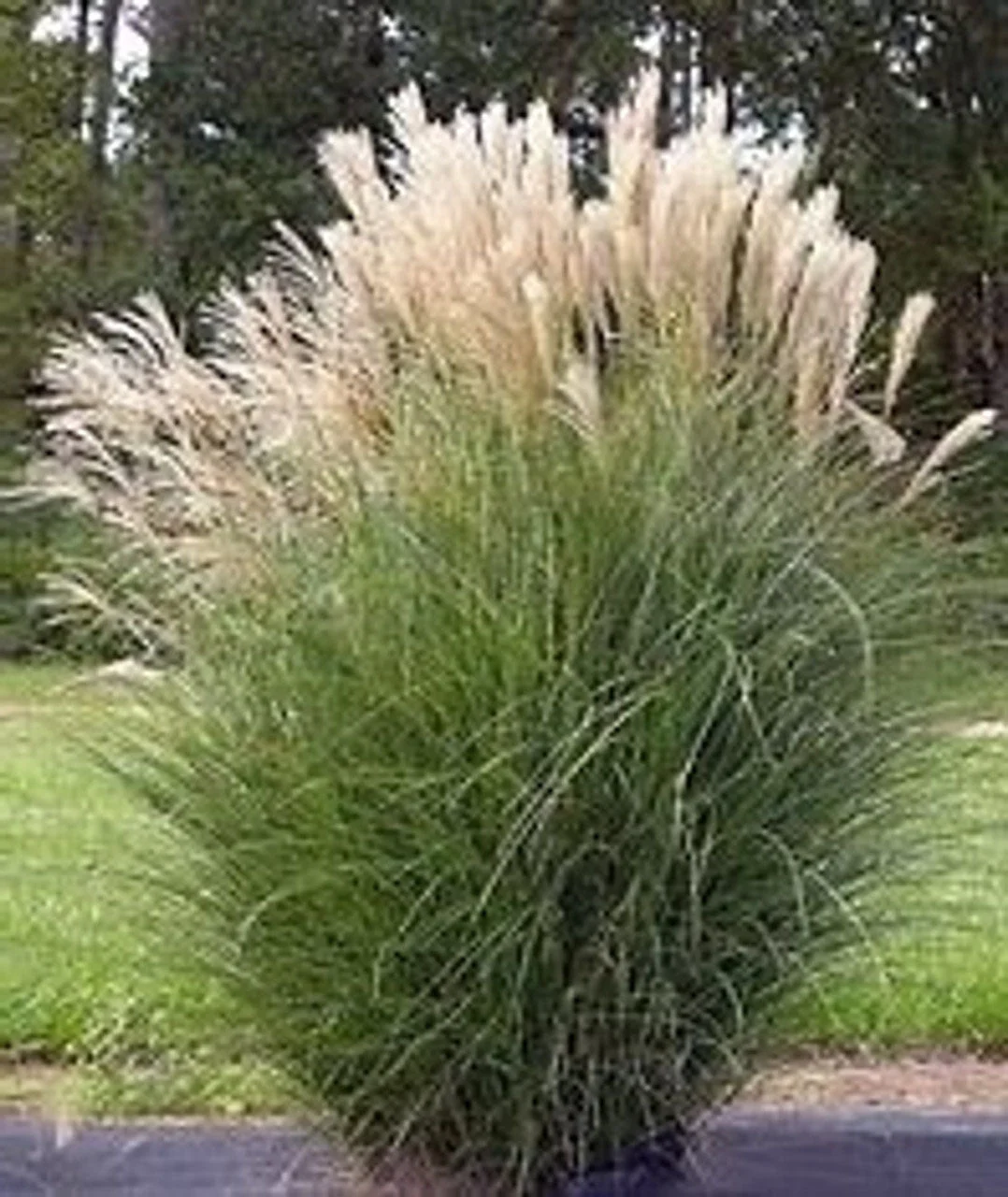
What a tray of seedlings gives you in return is a mixed bunch. Some will look close to the plant in the photo. Many will not.
This guide covers everything you need to know about growing Silver Feather Grass from seed, from reading the packet and sowing by climate zone to judging first-year seedlings and dividing the real plant.
Before You Order Seed of Silver Feather Grass
Seed sold under this name has a problem that starts with the plant itself. Every true Silver Feather is a piece of one original clump. The University of Minnesota's Miscanthus team tells growers to sell only vegetative, propagated, and named cultivars, and that one line explains why.
Seed is also scarce on this plant. Miscanthus is self-incompatible, so a single clump grown alone usually cannot set seed. NC State describes Silver Feather as considered sterile. Any seed that does form came from pollen of some other Miscanthus nearby, so it has two parents and only one is Silver Feather.
What a Packet Really Holds
A packet holds seed of unknown parentage with a cultivar name on the front. The USDA Forest Service also notes that Miscanthus sinensis seed viability can be variable, so even a full packet may germinate unevenly.
One of the most common questions we get is whether seed saved from a plume will come true. It will not, and a lone clump rarely makes any.
Check Before You Order
Run through this list before you pay for a packet.
- Look for a botanical name. "Miscanthus sinensis" alone means mixed seedlings, and 'Silberfeder' on a label is a name, not a guarantee.
- Ask what the seed parent was. If the seller has no answer, the answer is "unknown."
- Read the zone claim carefully. The Silver Feather clone is hardy in zones 4a–9b, but that rating belongs to the clone and not to a seedling.
- Decide what you want. If the goal is 7–8 feet of pinkish-silver plumes in a spot you have already picked, skip the packet.
What Seedlings Tend to Look Like
Expect a mixed tray. Seedlings carry genes from two parents, so they sort out the way siblings do. Some will resemble Silver Feather and others will resemble no named plant at all. The table shows where the differences usually appear.
| Trait | True Silver Feather | Seedlings |
|---|---|---|
| Height | 7–8 feet | Anywhere in the species range of 4–12 feet |
| Width | 4–6 feet | Tighter or broader clumps, depending on the parents |
| Plume color | Pinkish-silver in late summer | Paler, pinker, whiter or less silver |
| Bloom date | Late summer | Can run later, since the species flowers September through November |
| Spread | Considered sterile, does not spread aggressively | No promise of sterility |
Height is what surprises people most. A seedling that tops out at 4 feet looks lost at the back of a border planned for an 8-foot grass, and one that reaches 12 feet will crowd its neighbors. Our bloom time guide shows what the true plant does, so you have a yardstick.
The last row matters most. The species is weedy and invasive in North Carolina, and Silver Feather escapes that label only because it is sterile. A seedling does not inherit that protection. Before you grow seedlings, ask your local extension service whether Miscanthus is a concern in your area.
Sowing Silver Feather Grass by Cold Zone
If you still want to try, sow in the way that suits your winters. Skip the usual advice to chill the seed first. USDA Forest Service data show Miscanthus sinensis seed has little dormancy and a high germination capacity across a wide range of conditions, so a cold period is not needed. Lab germination worked from about 59 to 86°F, with the best results near 77°F.
So the real question is how to get a seedling big enough to meet its first winter. The table groups zones by how much season you have.
| Climate | Where to sow | When to sow |
|---|---|---|
| Cold (zones 4–5) | Indoors, under bright light | Late winter, timed so seedlings can go out after your last frost |
| Mild (zones 6–7) | Indoors, or a protected outdoor bed | Late winter to early spring indoors, outdoors only once the soil has warmed |
| Warm (zones 8–9) | Outdoor bed or indoor tray | Spring, once the soil is warm |
Your local extension service can give you your average last frost date, which is the anchor for every date above.
Sowing Steps
The sequence is the same in every zone.
- Fill a tray with moist seed-starting mix and level it.
- Scatter the seed on the surface and press it in. Dust it with a thin layer of mix at most.
- Label the tray with the sow date and the seed source.
- Hold the tray near 77°F and keep the surface damp.
A Note on Zone 4 Seed
Many searches pair this plant with zone 4 seed, so here is the plain answer. The named clone is listed for zone 4a, but seedlings are not the clone and carry no such rating. In zone 4, sow indoors so the plant gets a full season of growth before its first winter. If you need a sure zone 4 plant, buy a division. Our hardiness zones guide goes into the detail.
The First Weeks on the Seed Tray
Germination is quick. In the Forest Service data, Miscanthus sinensis seedlings emerged within 10 days of sowing, so start checking the tray daily from the first week.
Keep the Tray Moist
The danger comes later. The same data record that many seedlings died from drying out in warm, dry weather 3 to 4 weeks after sowing. Tiny roots dry out fast in a shallow tray. Check the surface every day and water from below or with a fine mist when it starts to pale.
Give Light and Thin Early
The adult plant wants full sun, meaning 6 or more hours of direct light a day, and seedlings want the brightest spot you have. Use a south window or a grow light a few inches above the tray. Seedlings that stretch and flop are not getting enough.
When the tray gets crowded, thin it in this order:
- Wait until the seedlings have a couple of true leaves.
- Snip the weakest ones at the soil line with small scissors. Pulling disturbs the neighbors' roots.
- Leave one strong seedling per cell or about an inch between plants.
- Pot the keepers up when the roots fill their cells.
- Harden them off gradually over several days before planting out.
Do not feel bad about thinning hard. You are not going to keep them all.
Year One for Silver Feather Grass Seedlings
Plant out after your last frost into the same spot a true Silver Feather wants. Choose full sun and moist, well-drained soil. The cultivar tolerates acid, neutral and alkaline ground. Our planting guide covers the hole and the timing.
Water through the first season, then let the plant settle in. Seedlings put their effort into roots first.
Judging Which to Keep
Tag every seedling with a number and write down what each does. In our rows, we judge a clump against the plant we are trying to match, never against its neighbors. Your yardstick is a mature height of 7–8 feet, a width of 4–6 feet and pinkish-silver plumes in late summer.
Record these four things for each plant:
- Height by midsummer, compared with the 7–8 foot benchmark.
- Plume color when the plumes first open.
- The date the first plumes appear.
- Whether the clump stays upright or flops.
Be patient. Mature plants carry the large feathery flowers, so a young seedling may show only foliage in its first season, and you should not cull on leaves alone. Hold your verdict until you have seen plumes.
Some advice says to keep every seedling because they are free. We say keep the one or two best matches and remove the rest before the plumes open. The species' seed is mainly dispersed by wind, and you do not want a yard full of strays. Cut the keepers back in early spring before new growth, as you would any Silver Feather. A seedling that matches is a lookalike, and it is still not the cultivar.
Why Division Keeps Silver Feather Grass True
Division is cloning with a spade. Every piece of a clump is the same plant as the original, so the new clump has the same height, the same plume color and the same bloom date. Miscanthus sinensis spreads mainly by rhizomes in the wild, and division simply does by hand what the plant does slowly on its own. The recommended propagation method for the species is division.
In our rows, new Silver Feather comes from division and never from a seed tray. That is the only way to be sure you are getting the plant on the tag.
When the Clump Tells You to Divide
The clump gives you the signal. University of Missouri Extension advises dividing maiden grass every third or fourth year to keep the center of the clump from dying. A ring of green around a hollow, tired middle means it is time. Silver Feather grows at a medium rate, so do not expect to split a young plant in its second year.
The Basic Sequence
Our division guide covers every step. Here is the outline:
- Cut the old growth back in early spring, before new growth appears.
- Dig the whole clump and lift it out.
- Cut it into sections with a sharp spade or saw, keeping roots and shoots on every piece.
- Discard the dead center and replant the healthy outer sections.
- Water well and keep the new plants moist while they settle.
One divided clump becomes several plants, and each is a true copy.
Seed, Seedling or Division, Settled for Good
The verdict is simple. Division is the route for anyone who wants Silver Feather Grass, because it is the only one that gives you the real plant. Seed suits the curious reader who wants to see what turns up and accepts that most of it will not match. Seedlings you raise are experiments, not cultivars.
The order of operations is this: buy one divided plant first, and treat any seed as an experiment. Our buying guide helps you choose that first plant.
Silver Feather Grass
Nursery-grown Silver Feather Grass in sizes from Quart Plant, shipped to your door.
From $49.49
Shop Now →Our Silver Feather grows on our farms in full sun, in ground that holds some moisture but never stays wet, and we raise every plant from a division of a parent clump, which is why each one matches the last. We're a grower-run shop, so each plant we send out is one we would put in our own beds. If you want the true plant and not a seed gamble, take a look at the Silver Feather we have ready.