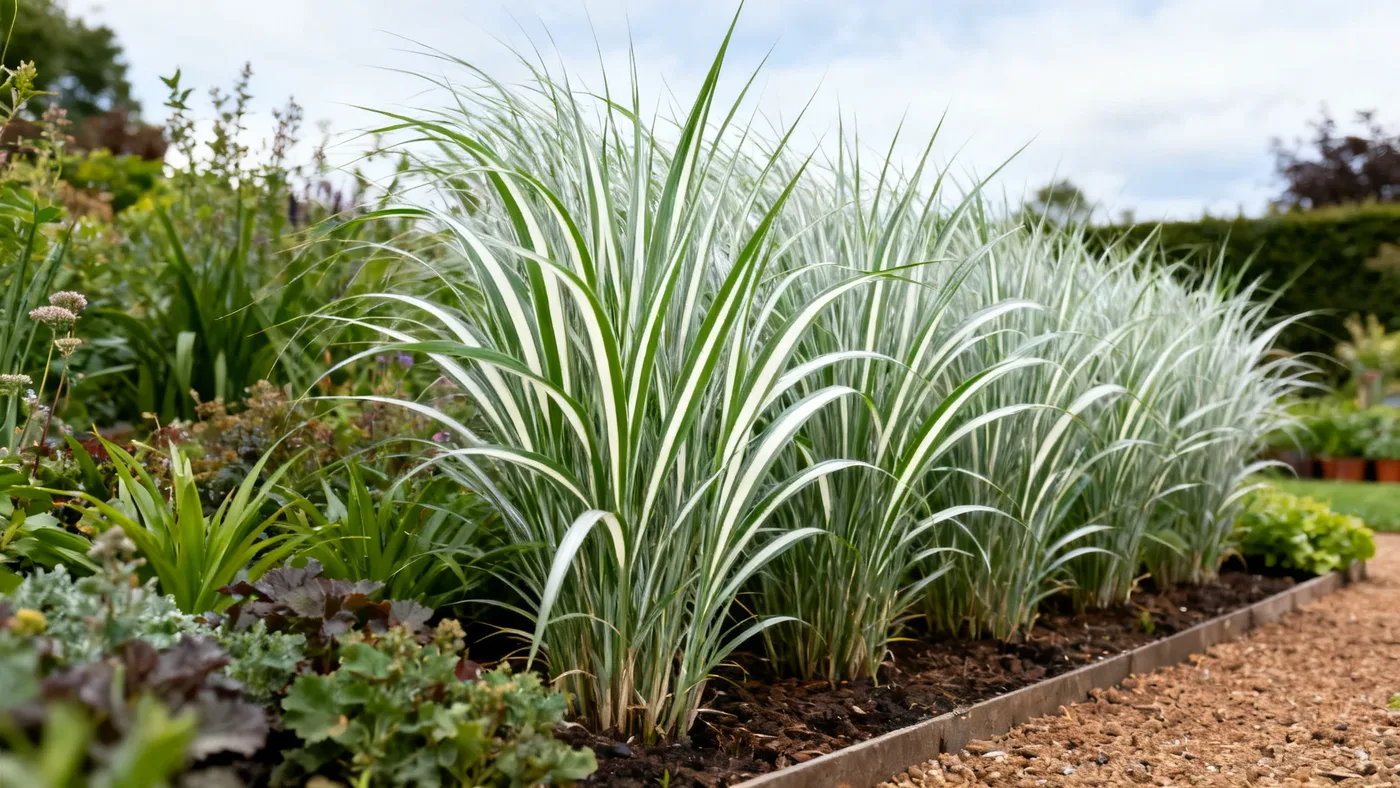
Silver Feather Grass Spacing for Borders, Screens and Masses
One question separates a lush, well-balanced garden from a crowded or sparse one: how far apart should you plant? With Silver Feather Grass, spacing is straightforward once you understand the plant's mature width and your landscape goal. This guide walks you through the math, the method, and what to expect along the way.
Understanding Silver Feather Grass Mature Size
Silver Feather Grass (Miscanthus sinensis 'Silberfeder') is a clump-forming warm-season ornamental grass with two distinct height measurements to keep in mind. The foliage clump itself reaches 3 to 4 feet tall, while the silvery flower plumes rise an additional 2 to 4 feet above that, giving you a total mature height of 6 to 8 feet in full bloom by late summer.
Width matters just as much for spacing. A mature plant spreads 3 to 4 feet across, though in ideal conditions with excellent soil and consistent moisture, individual plants occasionally reach 5 feet wide. This width is your primary tool for calculating distance between plants.
Expect the plant to take 2 to 3 years to reach its full mature size and best flower display. In the first growing season, growth is noticeably slower as the roots establish. You will gain roughly 1 to 3 feet of height per growing season once the plant is established, but year one feels deceptively quiet.
The Basic Spacing Formula
The spacing guideline for Silver Feather Grass is straightforward: plant 3 to 4 feet apart for mass plantings and privacy screens. This measurement is center-to-center, meaning the distance from the middle of one plant to the middle of the next.
Why this specific distance? At 3 to 4 feet apart, mature plants will touch or nearly touch at the edges, creating a unified look without overcrowding. Tighter spacing risks competition for water and nutrients, especially in the first year. Wider spacing takes longer to fill in but gives you more flexibility for afterthoughts or changes.
For how far apart to plant miscanthus in your specific situation, your landscape design goal determines the starting point. Use 3 feet if you want faster visual impact and earlier screening. Use 4 feet if you prefer more elbow room during installation or want to give individual plants room to show their structure as they establish.
Spacing for Single Specimens
A Silver Feather Grass specimen plant that stands alone needs breathing room. Place the plant's center at least 5 feet from other plantings, pathways, or structures. This spacing allows the mature clump to express its full arching form without crowding neighboring plants or obstructing foot traffic.
A specimen also benefits from placing it where afternoon sun lights the plumes from behind, making the silvery-pink flowers glow. The open space around it becomes part of the display.
Spacing for Privacy Screens and Hedges
If your goal is a seasonal privacy screen or informal hedge, stick to the 3 to 4 feet spacing across the row. Plant in a staggered double row (offset rows 2 feet apart) if you need denser screening faster, but this approach requires more plants and more careful moisture management in the first season.
For silver feather grass privacy screen spacing, remember that the screen's effectiveness depends on both height and density. Full density takes 2 to 3 years. In year one, you will see significant gaps. In year two, the gaps shrink noticeably. By year three, the screen usually delivers the visual effect you envisioned.
Height-wise, the 6 to 8 foot mature size with plumes delivers privacy even at second-story windows, though the view through the foliage clump (the bottom 3 to 4 feet) is denser than the airy upper plumes.
Spacing for Mass Plantings and Borders
Ornamental grass mass planting spacing works best when you commit to the geometric pattern from day one. For Silver Feather Grass, a simple approach is rows 4 feet apart with plants 3 to 4 feet apart within each row. This creates a grid that guarantees even coverage and equal access to sun, water, and nutrients.
An alternative is a staggered or offset pattern: place the first row 4 feet apart, then offset the second row so plants sit in the gaps between the first row's plants. This pattern looks more natural and can fill in slightly faster, but requires careful measurement to keep things even.
For border backdrops, Silver Feather Grass works well massed 3 to 4 feet apart in irregular groups of 3 or 5 plants. Groups of odd numbers feel more intentional than pairs or evens. Space groups 6 to 8 feet from one another to let each group keep its identity until they mature and begin to knit together.
Combination Plantings
When pairing Silver Feather Grass with companion plants, account for the grass's eventual 3 to 4 foot spread. Good companions include Rudbeckia (Black-eyed Susan), Sedum, Echinacea (Coneflower), and Aster. Plant companions 2 to 3 feet from the grass's center so they have room to mature without being shaded out by the grass's mature foliage clump.
Shorter companions work best in front of the grass, where they catch the afternoon light and soften the base of the clump. Taller companions like second-year Echinacea can sit to the side, creating a layered effect.
Step-by-Step Spacing and Planting Instructions
What You'll Need
- Measuring tape (25 feet or longer for larger plantings)
- Wooden stakes or survey flags to mark planting positions
- A string line for keeping rows straight (optional but helpful)
- A pencil or marker to note measurements
- Garden soil that drains well and holds average moisture
- Mature Silver Feather Grass plants from a nursery (usually sold in #1 or 3-gallon containers)
- Water source and hose
Planting Steps
Step 1: Choose Your Planting Location and Measure
Select a spot with full sun for best flowering and upright habit. Silver Feather Grass tolerates part shade but will bloom less and may develop a floppy habit in shadier conditions. Measure the total length and width of your planting area. For a screen, measure the linear distance you need to cover. For a mass or border, measure length and width.
Step 2: Mark Planting Positions
Using your measuring tape and stakes, mark the center point of each planting hole 3 to 4 feet apart. For a straight row, snap a string line and place stakes every 3 to 4 feet along it. For staggered rows, measure 4 feet between rows and offset the second row's marks by 2 feet laterally. For irregular groups, measure the center point of each group 6 to 8 feet apart, then estimate 3 to 4 feet between plants within the group.
Step 3: Dig Planting Holes
At each marked position, dig a hole slightly wider than the plant's root ball and equally deep. A typical nursery plant in a #1 container has a root ball about 8 to 10 inches across. The hole should be loose but firm enough to support the plant upright without sinking.
Step 4: Plant the Grass
Remove the Silver Feather Grass from its container and gently loosen the root ball's edges. Set the plant in the hole so the top of the root ball is level with the soil surface. Backfill with your garden soil, firming gently but not compacting hard. Water immediately to settle the soil.
Step 5: Water and Mulch
Give each newly planted grass consistent moisture through its first growing season. Consistent moisture means the soil stays damp to about 6 inches deep but never waterlogged. A 2-inch layer of wood chip mulch around each plant helps retain moisture and keeps competing weeds down. Keep mulch 3 to 4 inches away from the plant's center to avoid rot.
Step 6: Monitor and Adjust First-Year Growth
In the first year, growth will be modest. The plant is busy building roots, not height. Maintain consistent moisture and pull weeds that compete for nutrients. Do not fertilize heavily; excess nitrogen can cause flopping and weak stems. By the end of year one, you may have only 1 to 2 feet of visible height gain, and gaps between plants will still be obvious.
Tips and Common Mistakes to Avoid
Planting Too Close
Spacing tighter than 3 feet creates moisture competition and air-circulation issues, especially in humid climates. Wet foliage and congestion invite disease. Resist the urge to squeeze in extra plants to fill space faster. The plants will reach their intended size, and you will regret the crowding.
Planting Too Far Apart
Spacing wider than 4 feet takes years longer to create a unified look and leaves gaps that admit wind and unwanted seedlings. If your budget allows 3-foot spacing, use it.
Overwatering Established Plants
After the first season, Silver Feather Grass is drought-tolerant once established (2 to 3 growing seasons in). Do not assume gaps mean the soil is dry. Check before watering. Overly wet soil stresses the plant and invites root rot, especially in heavy clay or areas with poor drainage.
Forgetting the Long Timeline
A newly installed screen or mass planting looks thin. This is normal. Mark the date of planting and revisit photos each spring to track progress. By year three, the transformation is striking.
Planting in Late Fall or Winter
Silver Feather Grass should be planted in spring after your last frost date. Spring planting gives the plant a full growing season to establish roots before winter dormancy. Fall or winter plantings struggle to survive their first winter.
Expected Results and Timeline
Year one: Plants establish slowly. Growth is 1 to 3 feet of height. Flowering is sparse or absent. Gaps between plants remain obvious. Moisture management is critical.
Year two: Visible growth accelerates. Most plants flower for the first time or produce better displays than year one. Gaps begin to close. The design's structure becomes apparent. Established plantings may achieve moderate screening or massing effect.
Year three and beyond: Plants reach full mature height of 6 to 8 feet (including plumes) and width of 3 to 4 feet. Screens achieve full visual privacy from a distance. Mass plantings deliver the mature, cohesive appearance you envisioned. Flowering peaks and remains consistent if the site stays in full sun with average moisture.
Quick Reference: Spacing by Use
| Landscape Use | Spacing (Center-to-Center) | Notes |
|---|---|---|
| Single Specimen | 5+ feet from adjacent plantings | Plant stands alone; needs visual breathing room |
| Privacy Screen (Single Row) | 3-4 feet apart | Full screening by year 3; earlier effect with 3-foot spacing |
| Privacy Screen (Staggered Double Row) | 3-4 feet within row; 2 feet between rows | Denser faster; requires more plants; higher maintenance year one |
| Mass Planting / Grid | 3-4 feet both directions | Regular rows or staggered; geometric approach; easiest to execute |
| Border Backdrop | 3-4 feet within groups; 6-8 feet between groups | Plant in groups of 3 or 5 for natural look; allows companion planting in front |
| Combination Border | 3-4 feet from grass center to companion plants | Place shorter companions 2-3 feet from grass center; avoid shading |
Planning for Your Specific Zone and Conditions
Silver Feather Grass thrives in USDA zones 5 through 9, so spacing results may vary slightly by zone. In colder zones (5-6), plants may reach the lower end of the height range. In warmer zones (8-9), you may see the upper range and potentially faster fill-in by year two. In all zones, consistent moisture in the first year and full sun throughout the plant's life remain non-negotiable for success.
For more detailed information on long-term care, pruning, and seasonal management, see our complete growing guide to Silver Feather Grass care.