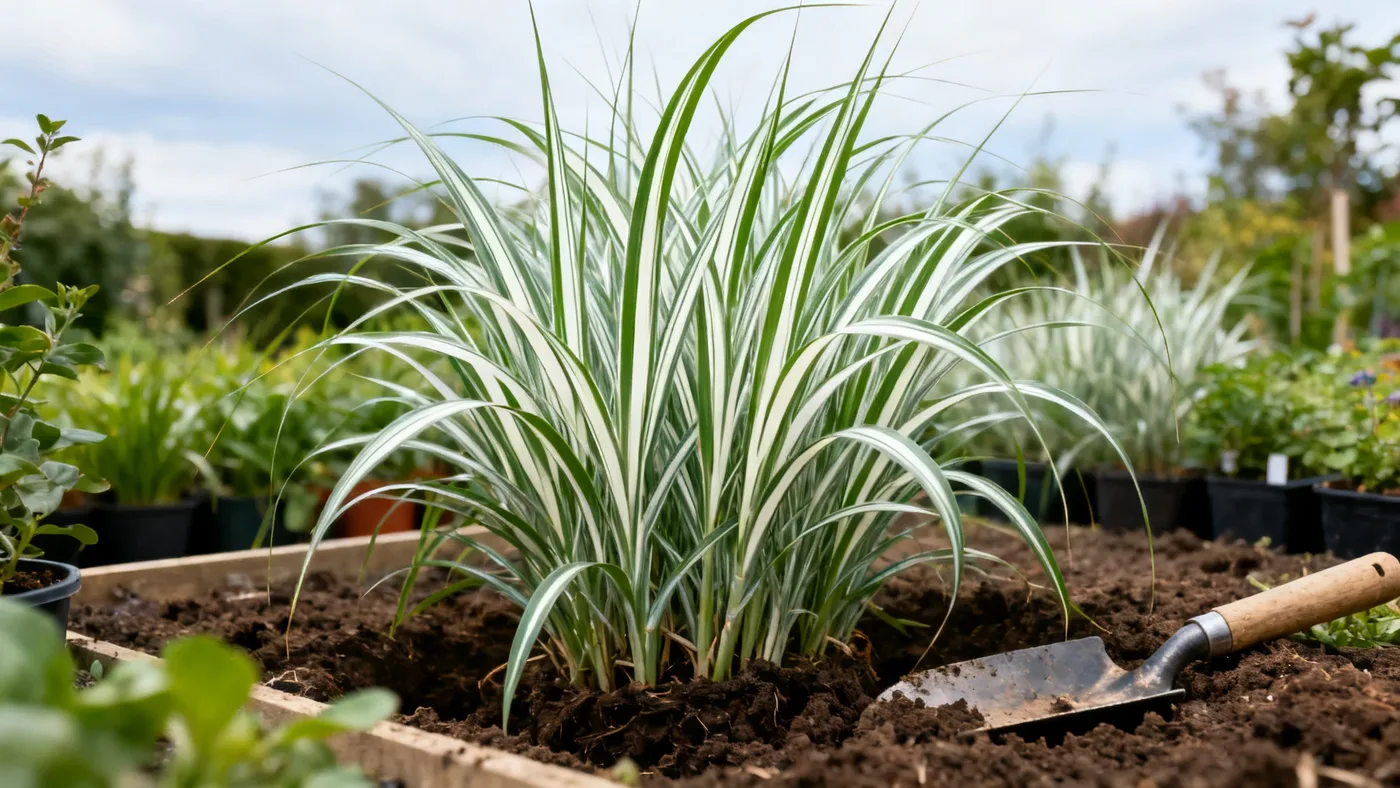
How to Plant Silver Feather Grass: Site, Timing and Tips
Planting Silver Feather Grass correctly sets the foundation for years of garden drama. This warm-season ornamental grass grows fast once established, reaching 6 to 8 feet tall at maturity, but getting it in the ground right is key to healthy roots and strong stems. Whether you're screening a view, anchoring a border, or creating seasonal texture, timing and site selection matter more than you might think.
What You'll Need
Before you dig, gather these materials:
- A nursery-grown Silver Feather Grass plant (typically sold in quart, #1, or #3 containers)
- A spade or sharp shovel
- Compost or aged organic matter (optional)
- Mulch (wood chips, bark, or shredded leaves)
- Watering can or hose
- Measuring tape or ruler
- Work gloves
Choosing Your Planting Site
Silver Feather Grass thrives in full sun. This is not negotiable for best results. In full sun, the foliage stays upright, the plant flowers reliably from late summer into fall, and the silvery plumes catch light beautifully. If you plant in part shade or light shade, the grass will still grow, but stems may flop and bloom may be sparse. Afternoon shade in very hot climates can prevent stem weakness, but morning sun is essential.
Soil adaptability is one of this grass's strengths. Silver Feather Grass accepts most well-drained soils, including clay, loam, and sandy blends. The pH can range from roughly 5.5 to 7.5, so you do not need to amend soil to a precise target. What matters most is drainage. The grass tolerates average to medium moisture and prefers soil that is moist but never waterlogged. If your site puddles after rain or stays soggy, either choose a different location or build a raised bed to improve drainage.
Space plants 3 to 4 feet apart if you are planting multiple grasses as a screen or mass planting. At full mature width of 3 to 4 feet per clump, this spacing allows air circulation and room for growth without crowding.
When to Plant Silver Feather Grass
Plant in spring, after your last frost date. This timing is critical because it gives the grass a full growing season to establish roots before winter. A strong root system in year one means faster growth and better drought tolerance in years to come.
If you live in USDA zones 5 or 6, spring planting is non-negotiable. In warmer zones (7 through 9), early spring still works best. Do not plant in fall, even in warm regions. Fall planting leaves roots shallow and vulnerable to winter freeze-thaw cycles.
Step-by-Step Planting Instructions
- Prepare the planting hole. Dig a hole as deep and wide as the grass's root ball. If the plant is in a #1 container (common size), your hole will typically be 8 to 12 inches deep and equally wide. Do not dig deeper than the root ball or the grass may settle and suffocate.
- Check soil drainage. Fill the hole with water and wait 30 minutes. If water drains within that time, drainage is adequate. If water pools or drains very slowly, either amend the planting area with compost to improve structure or choose a better-drained location.
- Remove the plant from its container. Gently slide the grass out of the pot. If roots are tightly wound around the root ball, loosen them with your fingers or a knife. This helps new roots escape into the surrounding soil.
- Set the grass at soil level. Place the plant in the hole so the top of the root ball is level with the surrounding soil. Do not bury the crown or base of the plant; buried crowns rot. Do not leave the root ball above grade either, or it will dry out.
- Backfill with native soil. Fill the hole with the soil you removed. You can mix in compost (up to one-third by volume) if you wish, but it is optional and not necessary. Firm the soil gently as you fill to eliminate air pockets.
- Water thoroughly. Water the newly planted grass until the soil is moist 6 to 8 inches deep. Water settles the soil and closes air gaps around the root ball.
- Apply mulch. Spread 1 to 2 inches of wood chips or bark mulch around the base, keeping it 2 to 3 inches away from the center of the plant. Mulch moderates soil temperature and moisture, but too much mulch packed against the crown invites rot.
First-Year Care and What to Expect
Do not expect a full-height specimen in year one. Silver Feather Grass is slow and clump-building in its first growing season while it establishes roots. You may see only modest height gain in months one through six. By the end of the first year, the plant typically reaches 2 to 3 feet tall. This is normal and healthy.
Flowering may be sparse or absent in year one. Most plants begin flowering reliably in their second or third season when the root system is stronger and the clump has matured. Again, this is not a sign of failure.
Water consistently during the first growing season, especially in the first 8 to 12 weeks after planting. Aim for steady moisture, roughly 1 inch per week from rain or irrigation. Once you see vigorous new growth (typically by midsummer), water needs decrease, though you should continue regular watering during dry spells until late fall to support root expansion.
Do not fertilize heavily. Silver Feather Grass is a light feeder. Excess nitrogen causes weak, floppy stems and defeats your goal of an upright, dramatic plant. If you wish to fertilize, apply a balanced fertilizer in spring, once growth is visible. Resist the urge to do more.
Tips to Avoid Common Mistakes
Mistake: Planting too deep. Bury the crown even slightly, and rot sets in. Always plant so the top of the root ball is flush with the ground.
Mistake: Choosing shade in hopes of preventing floppy growth. Shade does not prevent flopping; it causes it. Flopping happens in shade because the plant stretches for light. Flopping also happens with excess nitrogen. Full sun and balanced fertilizer prevent both problems.
Mistake: Overwatering or choosing a waterlogged site. Silver Feather Grass needs consistent moisture in year one, but it is not a bog plant. Waterlogged soil leads to root rot. If your site stays wet, build a raised bed or select a drier location.
Mistake: Planting too late in summer or in fall. Late-season planting leaves the grass time to establish weak roots before winter stress. Spring planting, after the last frost, is the standard recommendation.
Mistake: Ignoring local invasive status. The parent species Miscanthus sinensis has invasive status in parts of the eastern and mid-Atlantic US due to self-seeding. The cultivar 'Silberfeder' is generally considered lower-seed-viability than the species, but it is not seed-sterile. If you live in the Southeast or Northeast, check your state's agricultural extension or invasive species list before planting. Some regions restrict or prohibit Miscanthus cultivation.
For ongoing care after the first year, refer to the complete growing guide for Silver Feather Grass care, which covers pruning, fertilizing, division, and troubleshooting.
Quick Reference: Planting Checklist
| Task | When | Details |
|---|---|---|
| Choose site | Before planting | Full sun, well-drained soil, 3-4 ft spacing |
| Prepare hole | Day of planting | Dig as deep and wide as the root ball; test drainage |
| Plant grass | Spring, after last frost | Set at soil level; backfill; water well |
| Apply mulch | Immediately after planting | 1-2 inches, keep 2-3 inches from crown |
| Water (first season) | Weekly through fall | Consistent moisture; roughly 1 inch per week |
| Expect slow growth | Months 1-12 | 2-3 ft height in year one is normal; full size by year 2-3 |
| Light fertilize (optional) | Spring of year 2+ | Balanced formula only; avoid excess nitrogen |