Why Silver Feather Grass Dies Out in the Center
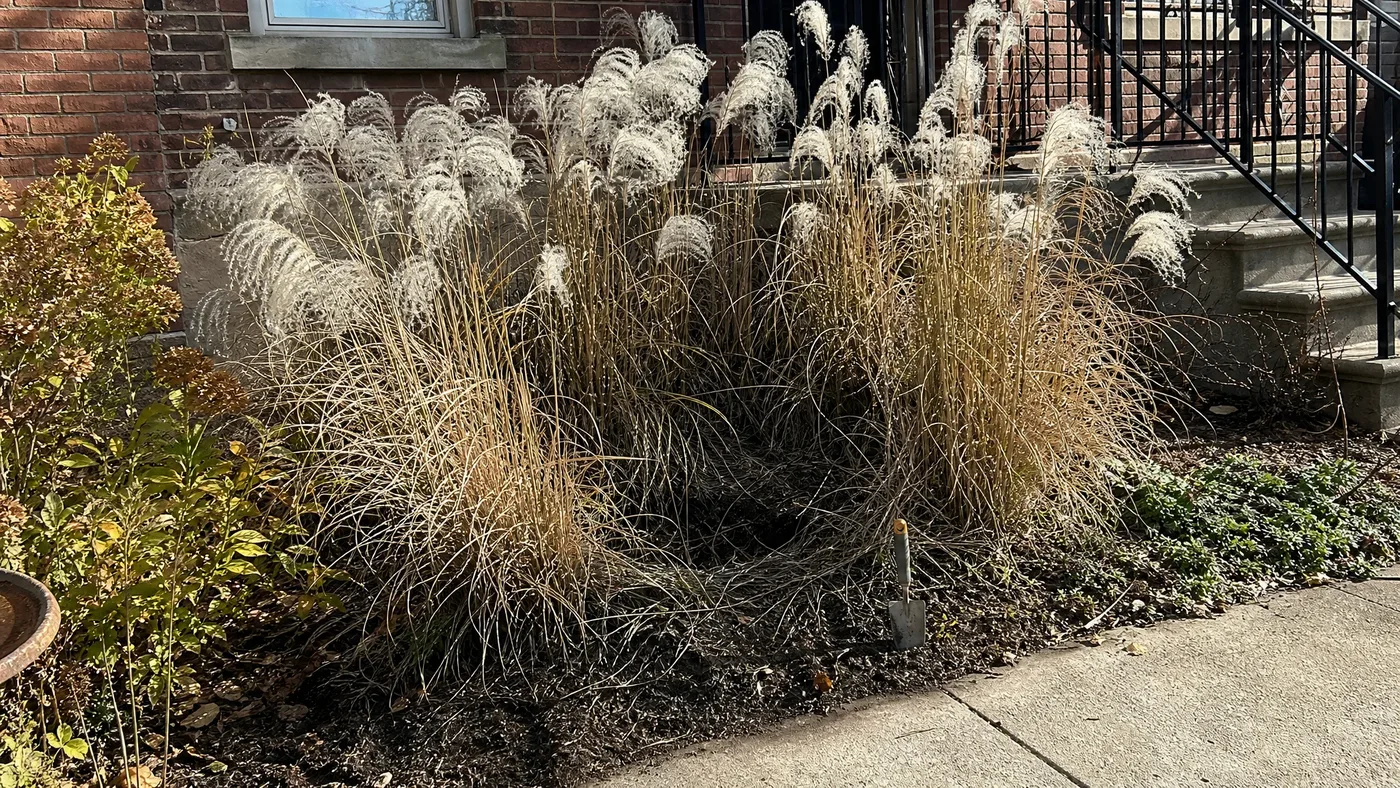
Walk past a decade-old Silver Feather Grass in late winter and you may find a straw-colored doughnut. A ring of dry stems stands around a hollow where the heart of the plant should be. This is the moment the problem turns urgent, because new shoots are about to start and a hollow clump only opens wider each year.
The ring is not rot, and it is not neglect. It is how this grass ages, and a spade fixes it. We'll walk you through how the clump grows and why its center fades, then how to read the pattern against look-alikes and why feeding and watering miss the cause, and finally how to lift, divide and replant.
Left alone, a hollow clump flops open and looks ragged all season. Divided on time, it comes back as several full plants.
How a Silver Feather Grass Clump Grows Outward From Its Crown
Every stem in your clump is a tiller, a shoot with its own leaves and roots, and each one rises from a bud on a rhizome. Rhizomes are the thick, horizontal underground stems at the base of the plant. Miscanthus reproduces primarily through rhizomes, and in this grass they stay close enough to build a tight clump instead of roaming.
The growth runs one way, outward. Each season the rhizomes extend a little and set new buds at the edge of the crown, the dense knot where rhizomes, buds and old stem bases meet. Those buds become next year's shoots. The living part of the plant creeps outward like a ripple on a pond while the older crown stays behind at the center.
That creep is why the cultivar ends up so broad. NC State lists Silver Feather at 7–8 feet tall and 4–6 feet wide, and calls it sterile and not aggressive in its spread. It does not seed around, so the clump is the whole story. Everything you see is the crown's own slow march.
In open grassland, a clump that drifts outward simply leaves its old center behind. In a garden bed, where we expect the plant to stay put and look tidy, the abandoned center shows. The doughnut is ordinary clump behavior, just in plain view.
In the first seasons you will see none of this, because shoots fill the middle and the clump looks solid. Later the center fades quietly under the old stems, and you notice only when the plant is cut or dormant. That is why the hollow seems to appear overnight.
Why the Oldest Roots in Silver Feather Grass Fade
A clump's age is not spread evenly. The center holds the oldest crown tissue and the oldest roots, while the rim holds the youngest buds and the freshest roots. As the ring moves outward, the buds in the middle stop making new tillers and the roots that served them slowly stop working. The centers of ornamental grasses often die as the plants get older, and this one follows the rule.
What remains in the middle is a packed mat of old stem bases and spent roots. It is dry, tough and slow to rewet, and nothing in it is growing. In our rows, the dead core is usually hard and matted, with every live root out at the rim. The shoots around that core look healthy because they are healthy.
How fast the hollow appears depends on your soil, your climate and how well the plant grows. Silver Feather is a medium grower, so a clump needs several seasons to build a dead center big enough to notice. A well-fed, happy plant tends to build its ring faster, so a hollow is not a sign you did anything wrong.
The hollow also changes how the plant stands. With no center to brace them, the outer stems lean outward, and Illinois Extension notes that Miscanthus sinensis may flop with age and die out in the center. At 7–8 feet tall, Silver Feather gives those leaning stems a long lever.
Reading a Hollow Ring in Your Clump
The pattern is easy to recognize once you know it. In spring, green shoots appear only around the edge while the middle stays bare, dry or sparsely filled with brittle old stems. Colorado State's PlantTalk puts it plainly: when the center dies, leaving blades just around the edges, division is necessary. A ring of vigorous growth around a dead core is the signature.
A few other problems can thin a clump, so rule them out before you pick up the spade. The table below sets normal center die-out against its common look-alikes.
| What you see | What it points to | How to tell |
|---|---|---|
| Dry, brittle, empty center with a strong ring of shoots | Normal aging of the crown | Dead tissue is hard and dry, and the rim grows vigorously |
| Dark, soft crown, sour smell, shoots pull out easily | Crown rot from wet soil | Rot is mushy and wet, and often reaches the rim too |
| Thin, pale growth across the whole clump | Too little sun or poor site | Thinness is even, and the plant gets under six hours of sun |
| Orange spots on the leaf blades | Rust on the foliage | Affects leaves, not the crown, and does not hollow the clump |
Customers usually ask us whether a hollow means rot. Almost always it does not. Miscanthus is essentially immune to disease and insect problems, and true crown rot comes with soggy soil, not age. Our guide to Silver Feather Grass problems covers the real troublemakers.
To check, cut the old stems back and press a trowel into the middle. Dry, woody, empty ground means normal die-out. Soft, dark, foul-smelling tissue means you have a drainage problem to fix first.
Why Water and Fertilizer Cannot Revive Silver Feather Grass
You cannot feed a dead center back to life. The old crown has no working roots left to take up water or nutrients, so anything you add reaches the rim, which is already growing fine. A richer diet gives you a fatter ring around the same hole. Our fertilizing guide explains why this grass rarely needs more than the soil provides.
Extra water does no better. The matted center sheds water or holds it sitting wet, and neither helps a crown that has run its course. Silver Feather wants moist but well-drained ground, and soggy conditions invite the crown rot that we ruled out above. A hollow clump on a wet site can end up with two problems instead of one.
Some advice says to top-dress the bare middle or fill it with compost and wait. We don't. The buds that would reform the center are gone, and soil piled on old crown tissue just holds moisture against it.
Cutting the grass back each early spring is still worth doing, since it clears old growth so new shoots are not shaded. It will not rebuild a center either. The only repair is to lift the clump, remove the dead core and start the living ring over as fresh plants.
Lifting and Cutting Silver Feather Grass Into Fresh Divisions
Dividing is a one-afternoon job, and a clump that has gone hollow is the easiest kind to split. The method is simple. Dig the clump, discard the dead middle, cut the healthy outer ring into pieces and replant. Our guide to propagating by division adds detail on handling the pieces.
Choose the Moment
Iowa State advises digging when the grasses begin to grow in spring. For Silver Feather that means late winter into early spring, just after you cut back the old stems and before the new shoots are tall. In cold zones, wait until the soil thaws. Dividing in the growth window lets the pieces root into warming soil with the whole season ahead.
Lift and Cut in Six Steps
Have a sharp spade, a garden fork and a tarp ready. A mature clump is heavy and densely rooted, so work steadily and ask for help with the lifting.
- Cut the old stems down to a few inches so you can see exactly where the living ring sits.
- Dig a trench just outside the ring of shoots, deep enough to get under the crown, without slicing through the rim roots.
- Pry the clump free with the spade and fork, working around it, and tip it onto the tarp.
- Cut out and discard the dead center.
- Slice the outer ring into sections with a sharp spade, a saw or an old axe, so each piece has shoots and a good set of roots.
- Keep the pieces shaded and damp until you replant, ideally the same day.
Decide What Stays
Keep the outer pieces with firm, thick shoots and plenty of roots. Discard anything woody, hollow or dry, even if it sits near the edge. A big ring can make several plants, but a piece with only a couple of shoots re-establishes slowly, so make the sections generous.
Replanting Divisions and Who Shelters in the Stems
Once the dead core is out, two jobs remain: getting the vigorous outer pieces back into the ground quickly, and respecting the small animals that use the old clump before you cut it. Both come down to timing. The pieces want to be in the soil within hours, and the stems want to stand until the very week you divide.
Set the Outer Pieces Back In
Replant the same day, in full sun with at least six hours of direct light, in moist but well-drained soil. Set each piece at the depth it grew before, and water it in well. Keep the soil evenly moist through the first season while the roots reach out. Our planting guide covers site and timing in more depth.
Give each division room for its eventual 4–6 feet of width, even though it starts small. If you want a mass planting, tighten spacing a little and plan to thin or divide again later. Pieces from the same ring will all start vigorously, so expect steady, even growth rather than a single dramatic flush.
Leave the Stems Until Division Time
This is where waiting pays off for wildlife. Standing stems and the dense crown give small creatures cover through winter. Many insects, spiders and other small animals tuck into hollow stems and the litter around the base, and birds often work over the clump on cold mornings. Cutting the grass in fall removes that shelter at the worst time.
The cutting-back guide explains why late winter or early spring is the right time to cut, and division day fits that window. When you cut, stack the stems in a quiet corner for a few weeks so anything sheltering inside can move on. Compost the dead center, or tuck it behind a shrub.
A Silver Feather Grass Clump That Renews Itself
The cycle is easy to remember. The ring grows outward, the center ages and fades, and you lift, split and replant the healthy rim. Water and fertilizer do not change that. For the closely related maiden grass, Missouri Extension says division every third or fourth year keeps the center from dying. Treat that as a starting point and check with your local extension service for your climate.
Picture the divided clump a year later: pieces grown together, full from edge to edge, with no hollow in sight. Then mark a calendar year for the next division, three or four seasons ahead, and let the grass do the rest.
Silver Feather Grass
Nursery-grown Silver Feather Grass in sizes from Quart Plant, shipped to your door.
From $49.49
Shop Now →Out on our farms, Silver Feather Grass gets full sun and moist but well-drained soil, and that steady ground is what lets a clump fill out evenly and divide cleanly years later. We're a small business that grows its own stock, raising top-quality grasses from start to finish. If a clump of yours has thinned in the middle past saving, a fresh one from our fields is an easy replacement.