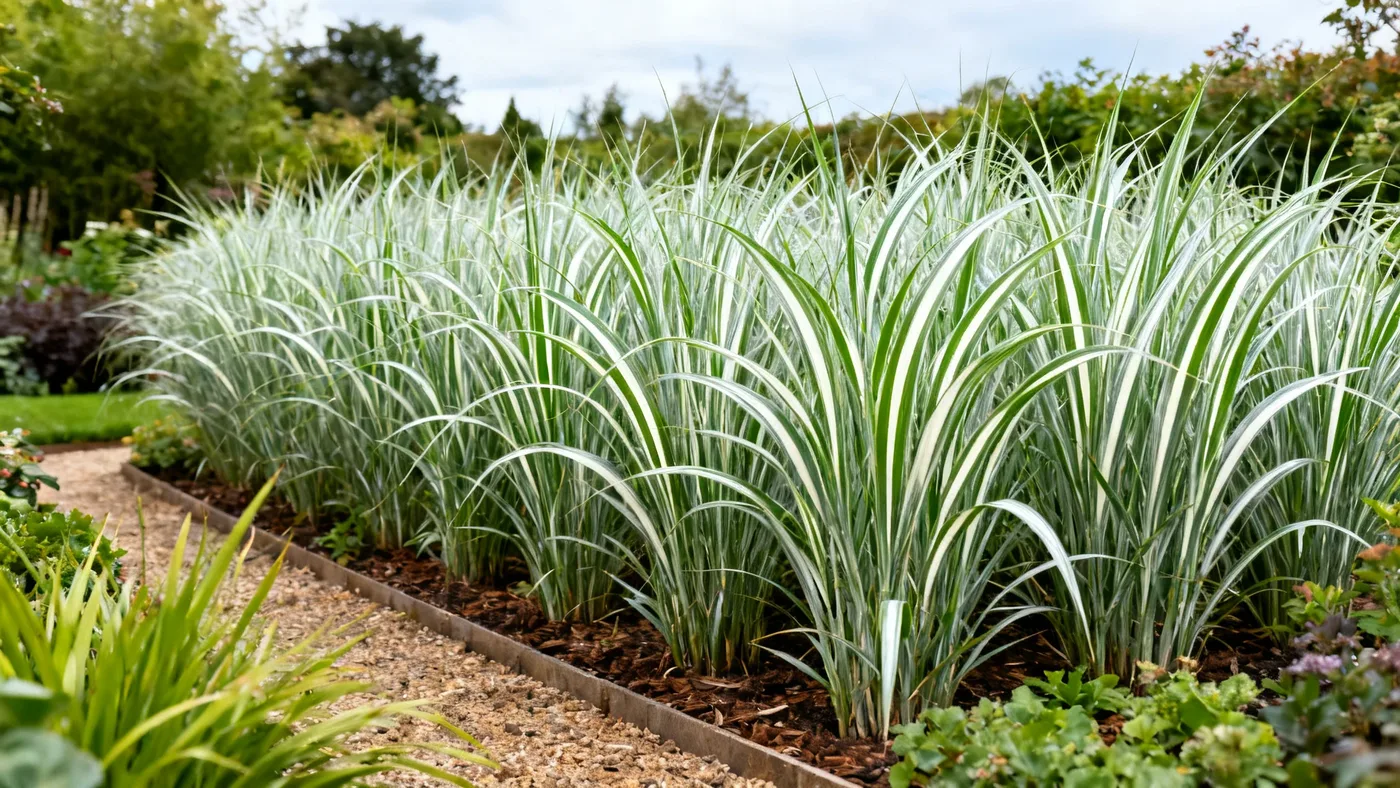
15 Landscape Ideas for Silver Feather Grass in Your Yard
Silver Feather Grass stands 6 to 8 feet tall (including its silvery plumes) and spreads 3 to 4 feet wide at maturity, making it one of the most striking ornamental grasses for residential landscapes. Its tall clump, fine-textured foliage with a prominent white midrib, and late-summer blooms from August through October give you flexibility in how you use it. Whether you want a bold specimen, a seasonal privacy screen, a border backbone, or a mass planting, this grass adapts to most well-drained soils in zones 5 through 9. Below are 15 proven ways to work Silver Feather Grass into your design, from companion pairings to seasonal interest tricks.
1. Solo Specimen Plant in a Focal Point
Place a single mature Silver Feather Grass where you want the eye to land. The combination of its tall, arching green foliage and silvery-white plumes rising 2 to 4 feet above the clump creates a natural focal point without any fuss. Site it at the corner of a bed, in the center of a circular garden, or at the end of a sightline where you want to anchor the view.
A solo planting lets the grass's architectural form stand alone, especially powerful in late summer when plumes emerge. Space it at least 3 to 4 feet from the nearest perennial or shrub so wind can move through it and display the plumes. The grass reaches its best size and bloom display after roughly 2 to 3 years, so be patient the first season while it establishes.
Practical takeaway: Choose a spot that gets full sun and won't be shadowed by nearby structures or trees. Avoid planting directly in front of doorways or windows where the 6 to 8 foot height might block views you want to preserve.
2. Seasonal Privacy Screen or Living Hedge
A row of Silver Feather Grass planted 3 to 4 feet apart creates a dense, tall screen that breaks up sightlines and reduces noise better than many shrubs. Unlike evergreen hedges, this screen comes into full density by late summer, offering privacy exactly when you need it (when you're outside during warm months) without the year-round maintenance of trimming and shaping.
The dense clump of narrow, upright-to-arching foliage blocks views effectively once plants are established. By midsummer, each clump fills its 3 to 4 foot footprint, and by August the silvery plumes add an extra layer of texture and visual weight to the screen. In winter, the tan foliage persists and still provides some visual interest and sound dampening.
Practical takeaway: Space plants 3 to 4 feet on center for a solid screen. Plant in early spring to allow a full growing season for roots to establish. Use this screen technique along a property line, patio edge, or between you and a neighboring view.
3. Mass Planting for Bold Impact
Group five or more Silver Feather Grass plants in a drift or mass for a meadow-like, high-impact effect. The repeated silvery plumes create movement and rhythm across the landscape, especially when wind catches them. This approach is common in modern landscape design and works well as a border backdrop or standalone feature.
Space plants 3 to 4 feet apart (you can plant slightly closer for faster visual fill). Stagger them in an odd number grouping (5, 7, 9, or more) rather than in a straight line, which looks more natural. After 2 to 3 years, the mass fills in completely and looks like a unified feature, not individual plants.
Practical takeaway: This technique works best in larger yards where you have room for 100+ square feet of planting. Mass plantings reduce the sense of maintenance and look intentional rather than accidental. Water consistently the first year to speed establishment.
4. Border Backdrop Behind Shorter Perennials
Use Silver Feather Grass as the tall backdrop for a layered perennial border. Plant it behind shorter companions (12 to 30 inches) so the grass towers above and frames them without casting shade. The 6 to 8 foot height is tall enough to work behind nearly any herbaceous perennial you choose.
This layering creates depth in the garden and lets you compose a tapestry of colors and forms in front while the grass provides consistent vertical structure. The silvery plumes become a neutral background that doesn't compete with the colors of the plants in front. Plant the grass first or ensure it's already established before adding lower companions, since it takes 2 to 3 years to reach full height.
Practical takeaway: Leave 3 to 4 feet of space between the back edge of shorter plants and the center of the grass clump. This prevents shading and makes it easier to cut back the grass in late winter without disturbing the border in front.
5. Rudbeckia and Black-eyed Susan Partner
Silver Feather Grass and Rudbeckia (Black-eyed Susan) are a natural pairing. Both bloom in the same window (Rudbeckia flowers from mid-summer into fall), both thrive in full sun and well-drained soil, and both are drought-tolerant once established. The golden-yellow petals of Rudbeckia play beautifully against the silvery-white plumes of the grass, creating contrast without clashing.
Plant Rudbeckia in groups of 3 to 5 at 18 to 24 inch spacing in front of or beside the grass. Rudbeckia stays in the 2 to 4 foot height range (depending on variety), short enough that the grass towers above it. Both plants are tough, low-maintenance, and attract pollinators and songbirds, making this partnership as functional as it is beautiful.
Practical takeaway: Combine these two without fussy deadheading or staking. Let the Rudbeckia flowers fade naturally in fall; they'll still look good beside the persisting grass plumes. No special fertilizer needed for either plant.
6. Sedum Pairing for Textural Contrast
Pair Silver Feather Grass with low, creeping sedums to create dramatic contrast in form and scale. Sedums stay 6 to 12 inches tall and spread slowly, filling the ground plane while the grass towers overhead. Both plants are drought-tolerant once established, so watering can be minimal after the first season.
Use sedums like Autumn Joy or Dragon's Blood in front of or mixed around the base of the grass clumps. The fine, airy texture of the grass foliage above makes the fleshy, compact sedum leaves look even more distinct by comparison. In fall and winter, sedum foliage often turns bronze or red, adding another layer of seasonal interest beneath the tan grass and silvery plumes.
Practical takeaway: Plant sedums at least 2 feet away from the grass center so water drainage patterns don't interfere. Both plants prefer well-drained soil, so amend with compost at planting if your native soil is heavy clay.
7. Echinacea Companion Planting
Echinacea (Coneflower) in pink, purple, or white creates a sophisticated bed with Silver Feather Grass. Both plants are tall (Echinacea reaches 2 to 4 feet), well-structured, and bloom in late summer and fall. The upright cones of the Echinacea contrast with the airy plumes of the grass, and together they provide strong sculptural interest.
Echinaceas are available in many cultivars, so you can color-match them to your scheme. A white Echinacea like 'White Swan' looks crisp next to silvery grass plumes. Deep purples and magentas add drama. All Echinaceas are tough, drought-tolerant once established, and beloved by butterflies and finches. Plant Echinacea 2 to 3 feet in front of or beside the grass to avoid crowding.
Practical takeaway: Deadhead Echinacea flowers through August and September for continuous bloom, or leave the seed heads on for fall and winter interest. Both the Echinacea cones and grass plumes persist into winter, extending the visual show.
8. Aster Border Mix for Extended Fall Color
Asters and Silver Feather Grass bloom in the same season and create a long parade of color in late summer and fall. Asters stay shorter (2 to 3 feet typically) and bloom in shades of pink, purple, blue, and white. When paired with the silvery-white plumes of the grass, asters extend the garden's peak season when many other plants are fading.
Plant asters 2 to 3 feet in front of or beside the grass. Both plants handle late-season neglect well and don't require deadheading to look good. After an autumn frost, the aster blooms and grass plumes create an especially striking composition, and both persist into early winter.
Practical takeaway: Choose aster varieties that are mildew-resistant if your region is humid. Space them well for air circulation. Unlike deadheaded Echinacea, you can leave asters alone in fall; the self-cleaning blooms look fine as they age.
9. Mixed Ornamental Grass Border
Combine Silver Feather Grass with other ornamental grasses for a cohesive, meadow-like border. Pair it with shorter Miscanthus cultivars like 'Gracillimus' (4 to 5 feet) or shorter cool-season grasses like blue fescue or feather reed grass. The result is a textural composition with varied heights and plume colors (tan, white, reddish).
Ornamental grasses naturally complement each other and require similar care: full sun, well-drained soil, minimal fertilizing. A mixed grass border is lower-maintenance than a perennial border because grasses don't need deadheading, staking, or frequent division. Plant 3 to 4 feet apart depending on mature width, and thin or divide every 3 to 4 years to prevent overcrowding.
Practical takeaway: Cut all grasses back hard (4 to 6 inches) in late winter before new growth emerges. Do this in one session each year, not throughout the season, to keep the border looking unified and intentional.
10. Cut Flower Arrangements
Harvest Silver Feather Grass plumes in late summer or early fall (August through October) when they've turned from silvery-pink to white. Cut stems last 2 to 3 weeks in a vase with or without other flowers. The plumes are lightweight, airy, and add height and movement to any arrangement without competing for visual attention.
Cut stems just below the base of the plume, leaving 12 to 24 inches of stem to work with. Strip lower leaves so they don't sit in the vase water. Mix the grass with roses, dahlias, zinnias, or other late-summer bloomers, or use the plumes alone in a tall, narrow vase for a minimalist statement. Unlike many cut flowers, these plumes need no special conditioning and don't require frequent water changes.
Practical takeaway: Harvest plumes early in the morning when stems are turgid and cool. Repeat harvesting from the same plant doesn't harm it, and you can cut from multiple stems on a mature clump without damaging the overall appearance. Store cut plumes in a cool, dry place for weeks before arranging if you want to preserve them.
11. Dried Flower and Plume Preservation
Hang-dry Silver Feather Grass plumes for year-round use in dried arrangements, wreaths, or seasonal installations. Cut plumes in September or early October when fully silvery-white, tie them loosely in small bundles, and hang upside-down in a cool, dry spot. After 2 to 3 weeks, they're completely dry and will last 6 months or longer.
Dried plumes can be bleached with diluted household bleach for a whiter finish, dyed with floral dyes to match a color scheme, or left natural for a neutral, organic look. Use them in vases (no water needed), glued into wreaths, or added to potpourri blends. The texture and durability of the grass plumes make them ideal for long-lasting installations.
Practical takeaway: Dry plumes away from direct sunlight to prevent fading. Store them upright in a tall vase or loosely in a paper bag to avoid crushing. Dried plumes are fragile but reusable year after year.
12. Winter Structure and Visual Movement
Leave Silver Feather Grass standing through fall and winter for year-round interest. The tan foliage and silvery plumes persist from October through early spring, providing structure and movement when most gardens are dormant. Wind creates a gentle, graceful motion that's especially striking in winter light and snow.
The winter form is architectural and doesn't look shabby or neglected the way some perennials do. If snow or ice weighs down the plumes, they bounce back as conditions change. This persistent structure also provides shelter and nesting material for overwintering birds and beneficial insects. Cut the foliage back hard to 4 to 6 inches in late February or early March before new growth emerges.
Practical takeaway: Don't cut the grass back in fall. Leaving it standing all winter protects the crown of the plant and gives you months of visual interest when the garden is otherwise quiet. Mark the planting spot with a stake if you might accidentally step on or dig up the dormant clump.
13. Cottage Garden Backdrop
Integrate Silver Feather Grass into an informal cottage garden as a tall, structured backdrop for a loose, layered planting of heirloom perennials, roses, and self-seeding annuals. The grass's architectural form provides the scaffolding that keeps a cottage garden from looking chaotic. Plant it behind lavender, garden phlox, catmint, roses, and naturalized perennials.
The silvery-white plumes complement almost any cottage garden color scheme. The grass is tough and forgiving, and it doesn't compete with neighboring plants for water or nutrients once established (2 to 3 years in). Its late-summer bloom time means it's still adding visual interest when many cottage garden favorites are past peak.
Practical takeaway: Give cottage plantings room to breathe. Don't overcrowd the grass with too many companions directly around it. The grass works best when it has space to show off its form while neighboring plants fill in the lower layers.
14. Modern Minimalist Landscape Feature
In a clean, minimal design, a single mature Silver Feather Grass (or a symmetrical pair flanking an entry) becomes a sculptural element. The fine foliage, tall upright habit, and architectural plumes fit the aesthetic of contemporary landscape design. Pair it with gravel, hardscape, and a limited palette of evergreen shrubs for a calm, sophisticated look.
The grass's low maintenance requirements align perfectly with minimalist design philosophy. No fussy companions needed. One grass per 100+ square feet of open space lets it stand alone. A pair framing a gate, driveway, or entry makes a bold statement. Repeat the planting in odd numbers (1, 3, 5) or symmetrical pairs, never in random groups.
Practical takeaway: In a minimal landscape, the grass needs absolutely full sun and perfect drainage. Don't compromise on site conditions. One underwatered, shaded grass looks neglected, not intentional. A thriving specimen in the right location is the whole point.
15. Entry or Driveway Statement Planting
Frame an entryway, driveway, or gate with Silver Feather Grass planted on either side (a symmetrical pair, spaced 3 to 4 feet from the centerline). The tall, feathery plumes are visible from the street and create a welcoming, sophisticated first impression. The seasonal color shift from green foliage to silvery plumes to tan winter form adds visual interest throughout the year.
This technique works whether you have a long driveway or a short walk to the front door. The 3 to 4 foot mature width is substantial enough to frame an opening without blocking access. Both plants can be cut back on the same late-winter schedule, so maintenance is simple and consistent.
Practical takeaway: Ensure the planting site gets full sun and has well-drained soil. If you live in zones 5 or 6, plant in early spring (after the last frost) to give roots a full season to establish before winter. Monitor soil moisture the first year to help roots settle in quickly.
Quick Reference: Silver Feather Grass Landscape Checklist
| Design Use | Spacing | Sun Requirement | Years to Mature |
|---|---|---|---|
| Solo Specimen | 3-4 ft from nearest plant | Full sun | 2-3 years |
| Privacy Screen | 3-4 ft on center | Full sun | 2-3 years |
| Mass Planting | 3-4 ft on center | Full sun | 2-3 years |
| Border Backdrop | 3-4 ft behind companions | Full sun | 2-3 years |
| Mixed Planting | 3-4 ft from others | Full sun | 2-3 years |
| Cut/Dried Flowers | As desired | Full sun | 1-2 years |
Plant Essentials: Silver Feather Grass thrives in zones 5 through 9, reaches 6 to 8 feet tall including plumes, and blooms August through October. It tolerates most well-drained soils and is drought-tolerant once established (2 to 3 growing seasons in). Learn more about planting, care, and pruning in the complete growing guide.