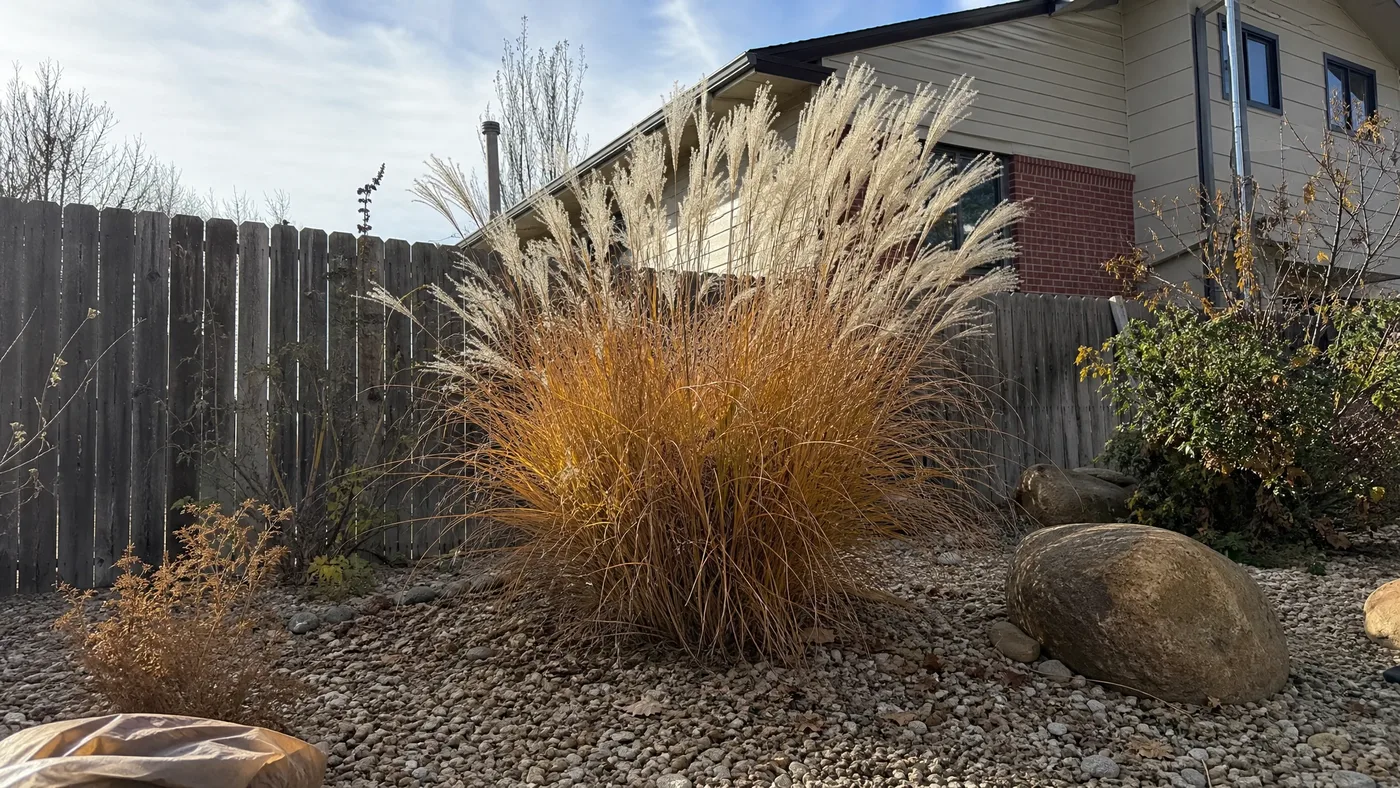
The History of Silver Feather Grass in American Gardens
Walk the older rows of a nursery this season and you will find a tall grass with a German name that people have been buying for decades. We noticed it again this year: customers point at 'Silberfeder' and ask whether something that common can still be worth a spot. Long before most of today's patented Miscanthus existed, this was one of the few tall grasses a home gardener could actually find and afford.
This guide covers everything you need to know about the history of Silver Feather Grass, from its German start and its trip into American nurseries to the look-alikes sold today and what its long record means for planting it now. History matters here because it tells you what you are getting: a plant that has had decades to show its faults, and has few left.
Where Silver Feather Grass Got Its German Start
'Silberfeder' is German for "silver feather," and the name is the whole sales pitch in two words. It is a named selection of Miscanthus sinensis, the same Asian grass that was already listed as a cultivated plant from Japan in an 1896 American source. The species came first. The cultivar came later, out of German plant selection, and that is the story this guide follows.
What We Can and Cannot Say About the Breeder
You will see a breeder's name attached to 'Silberfeder' in some places. None of the sources we trust confirm one, so we will not repeat a name we cannot back up. What the sources do agree on is the plant itself: green foliage topped by silver plumes that open a shimmering pinkish-silver in late summer. That is the trait someone noticed, kept and propagated.
Why the Spelling Varies
The trade name shows up as Silver Feather, Silverfeather and the original German. They are one plant. Our guide to Silberfeder and other synonyms sorts out the full list of names it travels under. When a tag carries any of these spellings, you can treat it as the same cultivar.
How a Garden Curiosity Reached American Nurseries
The species was in American gardens long before this cultivar showed up. Extension writers note that older Miscanthus cultivars such as 'Zebrinus', 'Variegatus' and 'Gracillimus' have been popular garden plants for over 100 years. Those earlier forms proved Americans would buy a big ornamental grass. 'Silberfeder' arrived into that market and offered something they did not: a silver plume you could see from across the yard.
We cannot give you an exact year or a named importer, because the sources we rely on do not record one, and we will not invent them. What we can say is that it crossed over as a named cultivar, was propagated here, and became one of the early tall grasses sold in real volume. Nurseries that wanted a tall plume in their catalogs had few other choices.
It also reached buyers who were not used to tall grasses as a design element. Most thought in terms of shrubs and perennials. A clump 7 to 8 feet tall that dies back each winter and returns bigger every year was a new kind of plant for them, and it sold itself on the nursery bench once the plumes opened.
Why Silver Feather Grass Sold so Widely in Early Catalogs
Three practical things drove sales, and none of them is marketing. First, it divides easily. A mature clump can be cut into several pieces with a sharp spade, and each piece grows into a new plant. Second, it is hardy across a wide range, from zones 4a through 9b, broader than the 5a to 9b given for the species as a whole. Third, the plumes are large and show well in a catalog photo.
Those three traits compound. A grower who can multiply a plant cheaply, ship it to cold and warm regions alike, and show a dramatic picture will sell a lot of it. The hardiness is what keeps a buyer from losing the plant in the first winter, and a plant that survives its first winter gets recommended to the neighbors.
Division also matters after purchase. Maiden grass clumps need dividing every third or fourth year, according to Missouri Extension, to keep the center of the clump from dying. The trait that made it easy to produce makes it easy to maintain, and our guide to center dieback covers the fix.
If It Is Everywhere, Is It Still Worth Planting?
Common does not mean dull, but you should test your own situation rather than follow the crowd. The worry that a plant seen in every strip mall landscape has nothing left to say is a design problem, not a plant problem. A single clump in a good spot reads very differently from a row of ten in a parking lot. Use these tests to decide.
- If you want a tall screen or back-of-border anchor, 7 to 8 feet tall and 4 to 6 feet wide, then it still fits better than most newer choices.
- If your site has full sun and ordinary soil, then it will perform. It tolerates acid, neutral and alkaline soil, and the neutral range runs from 6.0 to 8.0.
- If deer browse your yard, then it qualifies, since it resists deer.
- If you want a compact grass under 4 feet, then skip it. Choose something sized for the space instead of fighting a giant with pruning shears.
- If your spot is shady, then skip it too. It wants six or more hours of direct sun.
Plant it where its size is the point, and the fact that your neighbor has one stops mattering.
When Newer Grasses Get Mistaken for Silver Feather Grass
More than 50 ornamental forms of Miscanthus sinensis are sold in the U.S. nursery trade, according to the University of Minnesota, and many look alike from a distance. Tags get swapped, labels fade, and a plant sold as "silver maiden grass" may be anything. You can usually sort it out by checking a few features before you pay. Our comparison of other Miscanthus goes deeper, but these checks cover the basics.
| If the plant has... | Then check... |
|---|---|
| Striped or banded leaves | It is likely a variegated cultivar such as 'Variegatus' or 'Zebrinus'. 'Silberfeder' has plain green foliage. |
| Plumes that are not silver | Silver Feather is described as having a silver inflorescence. Other colors point to something else. |
| Height under 6 feet at maturity | Sources give 6 to 8 feet for this plant. A much shorter clump is probably another cultivar. |
| A trademark symbol on the tag | That usually means a newer named introduction, not this old cultivar. |
| Plumes opening in a different season | Ours emerge in late summer. Much earlier or later suggests a different plant. |
Sorting Out the Legal Side
Newer cultivars were bred for low fertility partly because the species spreads in some regions. Gardeners should look for cultivars bred to be less fertile, such as Bandwidth, My Fair Maiden and Scout. Rutgers notes that New Jersey prohibits the species except for two exempt cultivars, and 'Silberfeder' is not one of them.
Check your state's rules before buying. NC State describes Silver Feather itself as sterile and not aggressive, which sets it apart from the species, but rules are written for the species. Our guide on invasiveness and legal status goes further.
What an Old Cultivar's Low Price Tells You
Silver Feather usually costs less than newer Miscanthus, and that reflects its history, not its quality. It has been produced for a long time and it divides readily, so growers multiply it cheaply. Newer cultivars carry the cost of breeding, trials and marketing, and that shows up on the tag. For a plant this simple, the price gap buys you little in the garden.
A low price should push you to check the plant, not skip the check. Look for a clump with several healthy shoots, green blades and roots that fill the pot without circling hard. Compare the tag against the table above. Cheap and easy to divide is the point of this plant.
If you buy one and want more, you can divide your own, and a division from a mature clump is the same plant you started with. Check the rules on that if the tag shows a patent or trademark, since those mark newer cultivars with different terms.
Silver Feather Grass Today, Read Through Its Past
Its history tells you how to grow it. It was selected for plumes, sold for hardiness and propagated by division, so you plant it in full sun, give it room and divide it when the center thins. Pests and diseases rarely trouble it, and Missouri Extension calls most ornamental grasses remarkably pest-free.
Site, Soil and Timing
Full sun is the rule. Moist but well-drained soil suits it best, though it copes with clay, loam, chalk and sand. Give it the room a 4 to 6 foot spread needs, because crowding it is the quickest way to a leggy, tired clump.
Cutting Back and Dividing
Cut it back in early spring before new growth appears, which is the timing the Conservation Garden Park gives for this cultivar. Arkansas Extension says to cut maiden grass to the ground in late winter, before seeds begin to be released. Either window works, as long as you act before new shoots are up. Our complete care guide covers the rest once it is in the ground.
Silver Feather Grass Earns Its Place by Staying Reliable
The history comes down to this: a German selection became one of the first tall ornamental grasses sold in volume in the U.S., and it stayed common because it works. It is affordable because it is old and easy to divide, not because it is lesser. Newer cultivars look similar, so check the plant against what you know before you buy.
If you want a tall, proven grass and not a novelty, buy it and plant it.
Silver Feather Grass
Nursery-grown Silver Feather Grass in sizes from Quart Plant, shipped to your door.
From $49.49
Shop Now →Our Silver Feather gets a full day of sun, at least six hours, and soil that stays moist yet drains, then a cutback each early spring before the new shoots start. Behind the grass that earned its place in American gardens is a small team of growers raising our own grasses, shrubs and trees on our own farms. If this history has made you want a tall, proven clump of your own, we would be glad to have you pick one out for your garden.