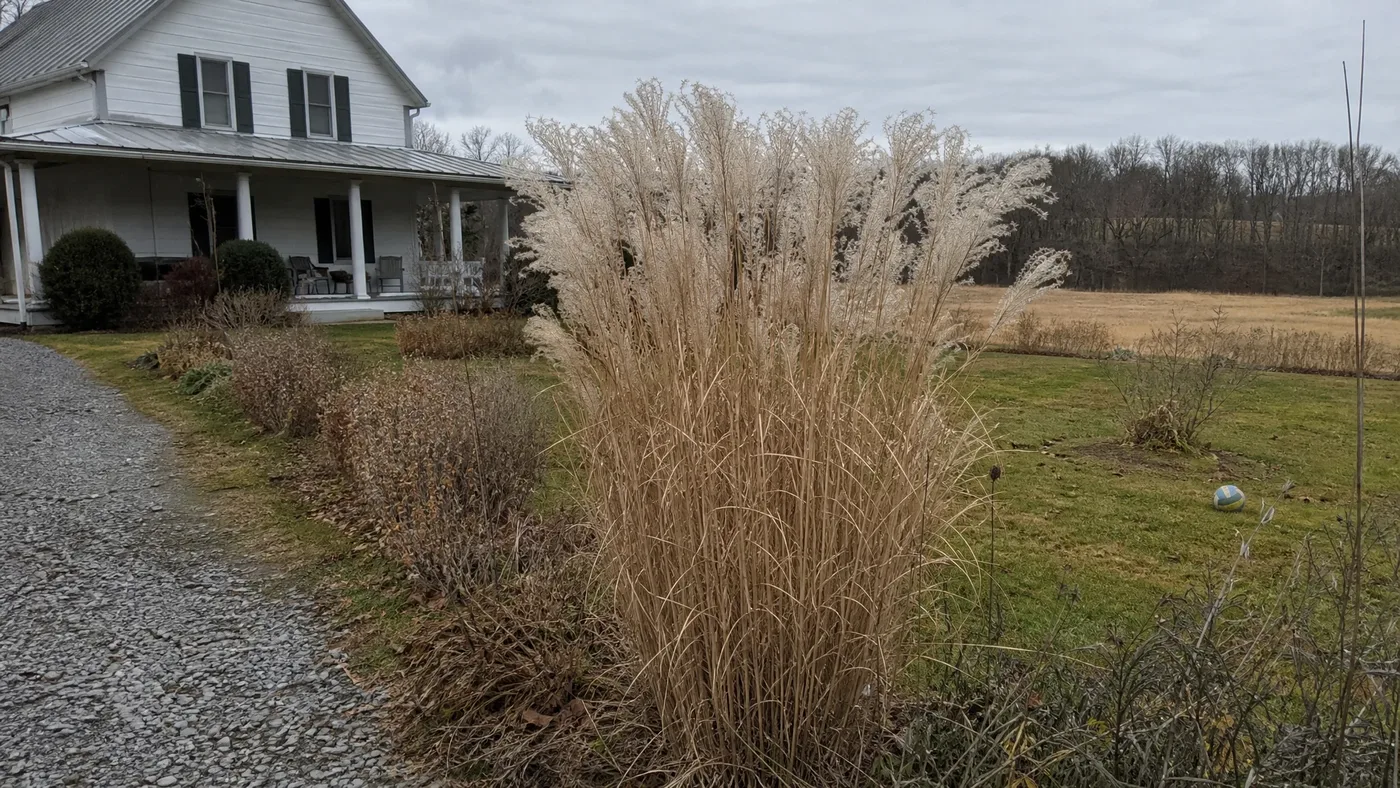
Silver Feather Grass in Coastal Gardens: Salt and Wind
You are standing at a fence post crusted white with salt, a ten-year budget sheet open on your phone, and one question on your mind: what will a 7 to 8 foot grass cost to keep alive facing the sea? Plant it wrong and you pay twice, once to buy it and once to pull it out.
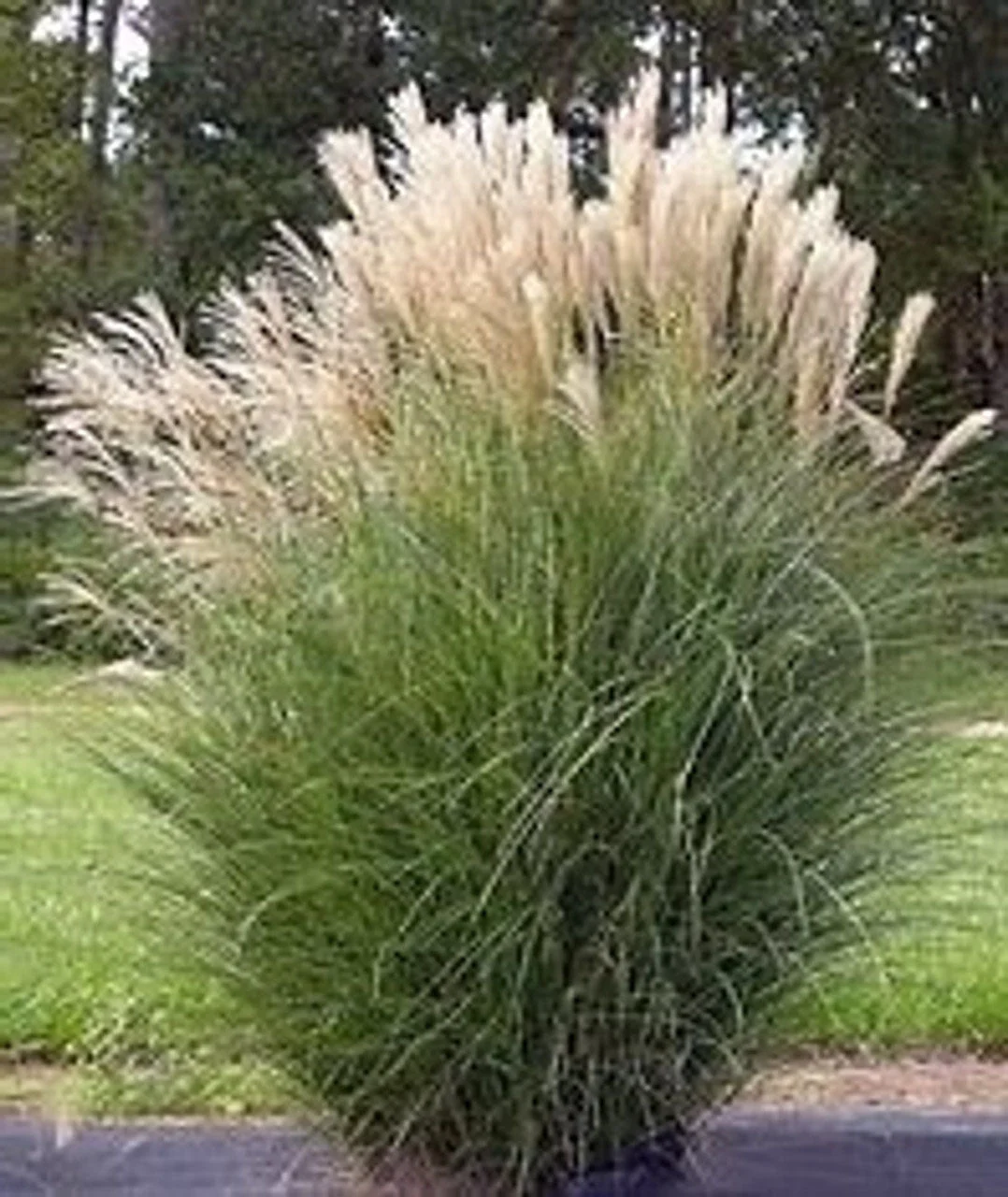
Silver Feather Grass holds a stiff, upright shape in onshore wind at a height most salt-tolerant grasses can't reach. That tolerance has limits, and the limits decide where in your yard it earns its place.
Below, you'll find out all about siting this grass near the coast, including how salt spray treats the foliage, four yard situations worked through with their costs, and a five-year tally to help you pick where to start.
What Salt Spray Does to Silver Feather Grass Foliage
After a hard blow off the water, walk out and look at the blade tips on the windward side of the clump. A thin tan fringe means the plant is doing what it should. Whole leaves gone straw-colored from the base mean your problem is probably in the ground, not in the air.
The two kinds of salt are rated differently. NC State tags Silver Feather as salt tolerant and lists it for coastal landscapes, which covers spray landing on the leaves. UF/IFAS, however, rates the species' soil salt tolerance as poor. Read that as permission to face the wind, not to plant in a salt-saturated hollow.
Rinse the Soil, Not the Plumes
Rain does most of the rinsing for free. After a dry spell with salty wind, give the clump a slow soak at the base with fresh water so salt moves down past the roots instead of sitting in the top layer. Do it in the morning, and aim at the soil rather than the plumes.
Read the Damage Before You Act
These are the signs we tell customers to sort by cause:
- Tan tips on the windward side only, with healthy green behind them, are spray burn. Leave them alone and cut them off with everything else in spring.
- Browning that climbs from the base through the whole clump points to salt in the root zone or poor drainage. Fix the site before you replace the plant.
- Blades that look shredded rather than scorched are wind damage. Long leaves on a 7-foot plant tatter in a gale whether or not salt is involved.
This is a warm-season grass that is cut to the ground every year, so a scorched season costs you looks, not the plant. Keep that trade in mind through the four cases below.
Narrow Side Bed Behind the Dune Fence
Picture a bed along the side of the house, wide enough for one row of plants and not much more, with a dune fence taking the first hit from the wind. The fence cuts the salt load, which is what you want. But the gap between house and fence acts as a funnel, and gusts speed up as they squeeze through.
The cultivar reaches 7 to 8 feet tall and 4 to 6 feet wide with an arching, loose habit, so a tight bed pushes the blades into the fence and the path. One of the most common questions we get is whether a fence alone is enough. For spray, yes. For width, no.
Set Out the Planting
Work through these steps before you buy anything:
- Measure the bed at its narrowest point and compare it to the 4–6 foot spread.
- Set the center of each clump at least half the mature width from the fence, so the blades arch without scraping.
- Space clumps by their mature width, not by the size of the pot. Our spacing guide shows how that looks in a row.
- Soak the base with fresh water after any storm that leaves a white film on the fence.
What Replacement Costs
Plan on never replacing the plant. A clump dug out of a narrow bed fights you all the way, and its roots wrap around fence posts and pipes. Instead, divide it every third or fourth year, which keeps the center from dying and costs you a morning with a spade. In a tight bed, each division also lets you cut the clump back to the room you actually have.
Windy Corner Lot With Tall Silver Feather Grass
A corner lot takes wind from two directions with nothing in the way. By late September the plumes, which open pinkish-silver in late summer, are fully out and the stems carry the most weight they will carry all year. That is the week a gale lays a clump flat.
The upright habit is the reason to plant this grass here at all, but stiff is not unbreakable. Three- and four-year-old plants of the species tend to flop and may thin in the center. In our rows, the clumps that lean first are the ones nobody has divided.
Staking Versus Dividing
Many guides tell you to stake tall grasses. We would rather not. A ring of stakes and twine holds the stems for one season, chafes the blades, and has to be rebuilt every year around a 7 to 8 foot plant. Dividing an older clump resets it to upright growth for the price of a morning's work, and it never needs rebuilding.
If you do stake, do it only for the first year or two, while the clump is still filling out. Use soft ties set low, and take them off once the plant stands on its own.
Cut Early or Leave It Standing
Leave the stems up through fall and winter. A full clump resists wind better as a bundle than any single stem would, and the dried plumes keep it looking intact. If a storm lays one flat anyway, cut it then. Otherwise make one low cut in early spring, before new growth appears.
Cutting in summer to prevent lodging removes the plumes you planted it for. Our guide to cutting back Silver Feather Grass covers the timing in more detail.
A Sandy Front Slope on a Tight Budget
A sandy slope drains in minutes, which is the plant's friend and the budget's enemy at once. Silver Feather is drought tolerant, and UF/IFAS calls the species quite drought tolerant and adaptable to well-drained soils. Sand itself is not the obstacle. Getting through the early years is.
The clump reaches about 8 feet after 2 to 5 years, and the water you give it in that stretch is your main cost. Soak deeply and rarely at the base so roots follow moisture down the slope instead of staying near the surface. Our watering guide covers how to taper off.
Where the Money Goes
This table sorts the usual purchases for a sandy planting into what to pay for and what to skip.
| Item | Verdict | Reason |
|---|---|---|
| Compost in the planting hole | Pay for it | Holds water around young roots in fast-draining sand. |
| Mulch over the root zone | Pay for it | Slows evaporation and keeps the sand from blowing off the roots. |
| Lime or sulfur | Skip | The cultivar tolerates acid, neutral and alkaline soil (pH 6.0–8.0 and wider). |
| Imported topsoil | Skip | The grass is adaptable to most well-drained soils, so sand is fine. |
| Permanent irrigation | Skip | Hand-water the early years and taper off as the clump matures. |
Our soil guide goes deeper on drainage if your slope has a clay layer below the sand.
Why the Slope Is Safe to Plant
Silver Feather is sterile and does not spread aggressively, even though the species is invasive in several states. That matters beside dunes, where you do not want seedlings in the neighbor's sand. Check your state's rules if you plant near natural areas.
Pot on a Hot, Salt-Blasted Deck
A deck bakes by afternoon, and a pot there dries faster than any of the beds above. The plant wants full sun, six or more hours a day, so heat is part of the deal. Salt is the real problem: spray lands in the mix, and nothing carries it away unless you flush it out yourself.
Pick the Pot for Weight and Drainage
Choose the largest pot your deck can safely carry. A grass that wants to reach 7 to 8 feet in a small container is a sail, and it will dry out in a day. Heavy glazed or thick resin pots hold moisture longer than thin plastic, which heats through. Keep the drainage holes open, because the species needs good drainage. Our container guide covers sizes and potting mix.
Flush, Then Water Again
The soil-salt rating hits hardest here, because a pot is a small root zone with nowhere for salt to go. After salty weather, water slowly with fresh water until it runs freely from the holes. Water again when the top of the mix feels dry. Do not let the pot sit in a saucer of salty runoff.
When It Stops Being Worth It
Count the chores: a heavy pot, frequent watering, flushing, and dividing when the clump fills the container. The in-ground hardiness range of zones 4a to 9b does not carry over to a pot, since roots freeze harder above ground. Ask your local extension service how your winters treat container plants. If you find yourself rescuing it more than once a season, plant it out.
Five Years of Silver Feather Grass by the Sea
Add the four cases up and the pattern is plain. The sheltered bed asks the least. The slope asks for water early and little after. The corner asks for a division or two and a spring cut, and the deck asks for something every week. Start where the fence already does the work.
Here is the tally for a sheltered bed wide enough for the clump. Year one: buy and plant once, water the base through dry spells, rinse after salty storms. Years two and three: water less and cut back once each spring. Year four: divide once. Year five: a 7 to 8 foot clump with no replacement. If that fits your budget, commit.
Silver Feather Grass
Nursery-grown Silver Feather Grass in sizes from Quart Plant, shipped to your door.
From $49.49
Shop Now →Our growers raise Silver Feather on our own farms in full sun and well-drained soil, watching it through the year for plume set in late summer and the first hard wind of fall. We grow every plant we sell ourselves, from trees and shrubs to grasses like this one. Take a look through our shop if your coastal bed has room for one.