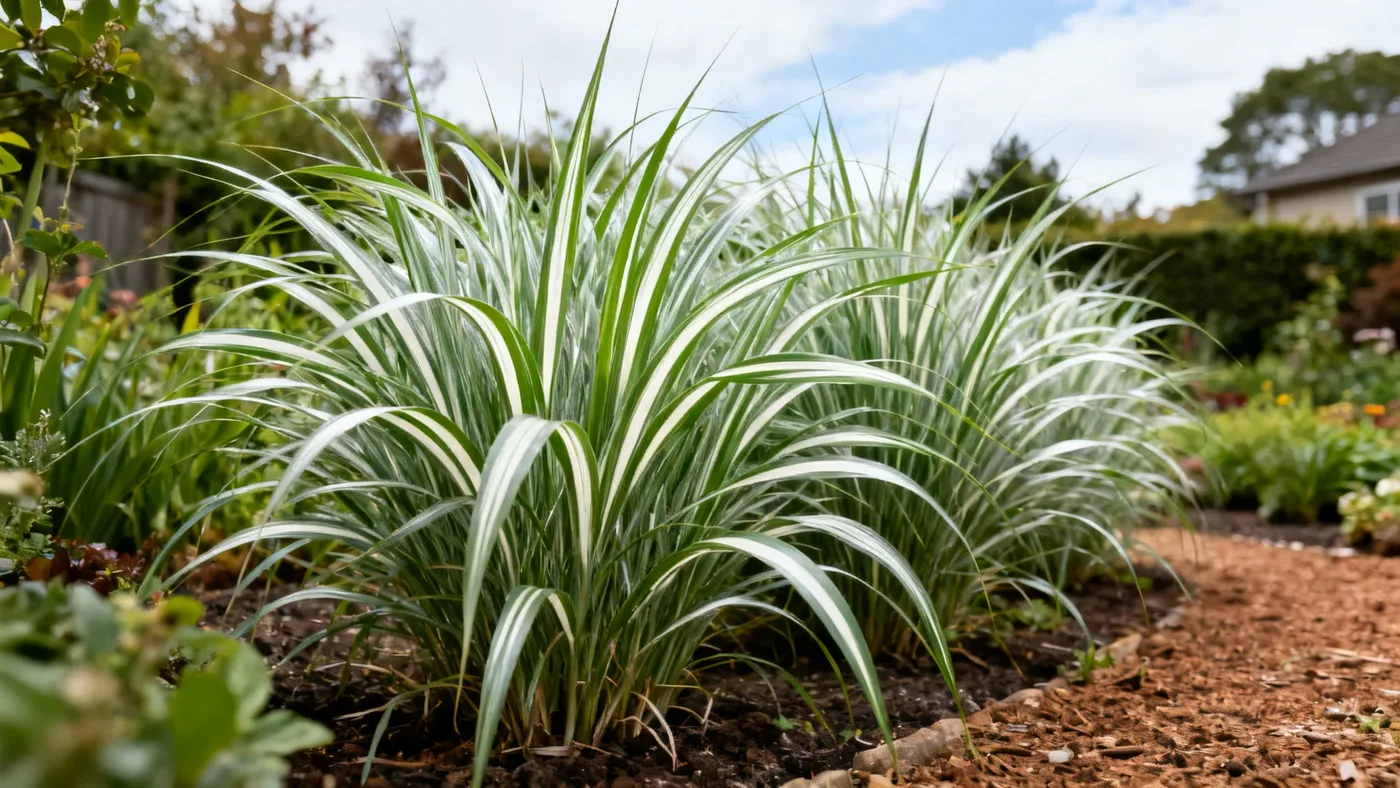
Silver Feather Grass Sun Requirements: Full Sun or Shade?
Silver Feather Grass puts on its best show in full sun. If you want upright stems, dense flowering, and those silvery plumes that make the plant worth growing, you'll need at least 6 to 8 hours of direct sunlight daily. That said, the grass won't die in partial shade, though it will sacrifice something important: structure and bloom quality. Understanding what "full sun" really means for this plant and how much shade it can tolerate will help you place yours where it will thrive for decades.
Why Full Sun Matters for Silver Feather Grass
Silver Feather Grass is a warm-season grass, which means it evolved to grow in bright, open environments. When you give it full sun (6 to 8 hours minimum of direct light per day), the plant channels energy into strong stems and prolific flowering. The foliage stays upright and dense, creating a neat columnar clump about 3 to 4 feet wide. The flower plumes, which emerge in late summer through October depending on your region, develop that signature silvery-pink to coppery color before maturing to silvery-white. In full sun, these plumes rise 2 to 4 feet above the foliage, making a statement even in a large bed.
Beyond aesthetics, full sun promotes faster, more vigorous growth. Once established, Silver Feather Grass can gain 1 to 3 feet of height per growing season in sunny locations. The strong stems also resist flopping (a problem called lodging), which can happen when the plant is overfed or shaded. You're essentially stacking every advantage in the plant's favor when you site it in full sun.
Can Silver Feather Grass Grow in Shade?
Yes, Silver Feather Grass tolerates light to part shade, but expect compromises. A plant in part shade (3 to 5 hours of direct sun) will survive and may even establish roots successfully. However, you'll notice visible differences. The stems tend to flop and lean toward light sources. The plant becomes less dense and more open in structure. Most importantly, flowering is reduced, and the plumes may be smaller and less abundant. A plant in deep shade (fewer than 3 hours of direct sun) will be noticeably thinner, rarely flower, and may struggle to establish a strong root system in its first year.
In practical terms, part shade is a compromise you make when you have no better option. It's not a failure, but it won't deliver the architectural impact that makes Silver Feather Grass special. If your property has predominantly shaded areas, you might instead consider other ornamental grasses that are shade-tolerant natives to your region. For Silver Feather Grass, put it where the sun is.
Evaluating Your Planting Location
Before you dig a hole, spend a day observing your site. Sunlight patterns change throughout the season, and what looks sunny in spring may have afternoon shade by midsummer when trees leaf out. Here's how to assess your location accurately.
Track the sun at key times: Walk your site at 9 a.m., noon, and 3 p.m. on a clear day. Note where shadows fall and how they move. Early morning or late afternoon shade is less critical than midday shade. A spot that receives 6 full hours of direct sun with afternoon dappling will work well.
Note what casts shadows: Evergreen trees block sun year-round. Deciduous trees shade heavily in summer but allow winter light. Fences and structures may create partial shade in one season but not another. A south-facing slope in zones 5 to 9 is often ideal, as it captures the most sun angle.
Check for wind exposure: While not strictly about sun, wind affects your choice. Full sun spots that also have strong prevailing winds can help keep stems upright. A calm, shaded corner may encourage flopping even more.
Observe soil drainage: Sun exposure often correlates with drainage. South-facing slopes dry out faster than north-facing ones. Silver Feather Grass adapts to most well-drained soils, but overly wet sites can stress even a sun-loving grass. If your full-sun spot is boggy, consider amending the soil or moving your plant.
Step-by-Step Guide to Choosing and Preparing the Right Spot
Step 1: Identify your sunniest location Look for a spot that receives at least 6 to 8 hours of direct sunlight daily, preferably from late morning through late afternoon. Avoid areas that are shaded in the morning but sunny in the afternoon; you want broad, full-day light coverage. If your property has multiple sunny spots, you have flexibility.
Step 2: Measure the space Silver Feather Grass matures to 3 to 4 feet wide, sometimes reaching 5 feet at full spread. Space plants 3 to 4 feet apart if you're mass-planting or creating a screen. Measure to ensure your chosen spot allows the plant's mature width without crowding neighbors or structures.
Step 3: Assess soil drainage Silver Feather Grass prefers moist but well-drained soil and adapts to most soil types, including clay and loam. Dig a small hole in your chosen spot and fill it with water. If water drains within 24 hours, drainage is fine. If it pools longer, you may need to amend with compost or choose a different site. Persistent waterlogging can rot the rhizomes, even in a sunny location.
Step 4: Check soil pH (optional) The plant adapts to a wide pH range (roughly 5.5 to 7.5) and doesn't require specialized soil preparation. If you know your soil pH is extremely acidic or alkaline, a simple soil test through your local extension service can guide amendments, but Silver Feather Grass is forgiving.
Step 5: Clear the planting area Remove weeds, grass, and debris from a 2 to 3-foot diameter circle centered on where your plant will go. A clean bed helps the new grass establish without competition for water and nutrients.
Step 6: Amend if needed If your soil is very compacted or poor, mix 2 to 3 inches of compost into the top 8 to 12 inches of soil. This improves structure without over-fertilizing. Overly rich soil can cause excessive foliage and weak, floppy stems, even in full sun.
Step 7: Plant in spring Silver Feather Grass is best planted in spring, after your last frost date. This gives it a full growing season to establish roots before winter. A first-year plant grows slower and builds its clump gradually, so a spring planting has the entire warm season ahead of it.
Tips and Common Mistakes to Avoid
Mistake 1: Planting in part shade and expecting full-sun results A plant in 4 hours of sun looks different from one in 8 hours. If you're drawn to Silver Feather Grass for its architecture and winter interest, don't compromise on light. Relocate the plant if shade increases over time as nearby trees grow.
Mistake 2: Over-fertilizing a sunny plant Full sun + rich soil = floppy stems. Light feeders don't need much. A balanced spring fertilizer is optional. If the plant is already growing vigorously, skip fertilizer entirely and let the sun do the work.
Mistake 3: Crowding for faster visual impact Planting closer than 3 feet to accelerate a screen is tempting but backfires. Crowded plants compete for water and sunlight. They may flop into each other, and air circulation suffers, increasing disease risk. Stick to 3 to 4-foot spacing and let the plants reach their mature width naturally.
Mistake 4: Ignoring summer shading from deciduous trees A site sunny in April may become shaded by July when nearby trees leaf out. If you're planning a mixed border, account for seasonal shade changes. If your spot becomes shaded mid-season, the bloom performance will drop noticeably.
Tip: Pair full-sun placement with consistent moisture the first year Once established (after 2 to 3 growing seasons), Silver Feather Grass is drought-tolerant. But a newly planted grass in spring needs steady moisture to establish roots. In full sun, evaporation is higher, so water regularly the first season, especially during dry spells. A 2-inch mulch layer helps retain moisture without overheating the crown.
Tip: Expect a slower first year Don't judge your plant's performance in year one. A spring-planted specimen gains height gradually in its first season while roots establish. By year two and three, growth accelerates to 1 to 3 feet of height per season. A sunny location makes this progression reliable and strong.
Expected Results
When you site Silver Feather Grass in full sun, expect upright, dense growth with prolific flowering by late summer. The foliage, which starts green with a prominent white midrib, remains in an architectural clump through the growing season. By August to October (depending on your region within zones 5 to 9), the flower plumes emerge and mature to silvery-white, persisting through winter and providing winter structure and movement. The plant becomes a living focal point, especially when backlit by low winter sun.
If you place the plant in part shade, growth will be noticeably slower, stems may lean or flop, and flowering may be sparse or delayed. The plant won't reach its full potential, though it will persist.
For a detailed guide to all aspects of Silver Feather Grass care beyond sun placement, see our complete growing guide.
Quick Reference: Sun Requirements and Site Checklist
| Condition | Outcome | Best For? |
|---|---|---|
| Full sun (6-8+ hours direct light daily) | Upright growth, dense foliage, prolific flowering, strong stems, fast growth once established | Yes, plant here |
| Light shade (5-6 hours direct light daily) | Acceptable; some minor stem flop possible, flowering slightly reduced | Acceptable if no better option |
| Part shade (3-5 hours direct light daily) | Visible flopping, sparse flowering, slower establishment, less architectural impact | Not recommended |
| Deep shade (fewer than 3 hours direct light daily) | Weak growth, minimal blooms, difficult to establish, not recommended | No, choose a different plant |
Site Prep Checklist:
- Receive 6 to 8 hours of direct sun daily
- Soil drains well within 24 hours of water
- Space allows 3 to 4 feet of mature width
- Soil pH is roughly 5.5 to 7.5 (or unknown, which is fine)
- Area is cleared of weeds and competing grass
- Compost or organic matter mixed in if soil is very poor
- Planting planned for spring after last frost date
- Water supply available for consistent moisture through first growing season