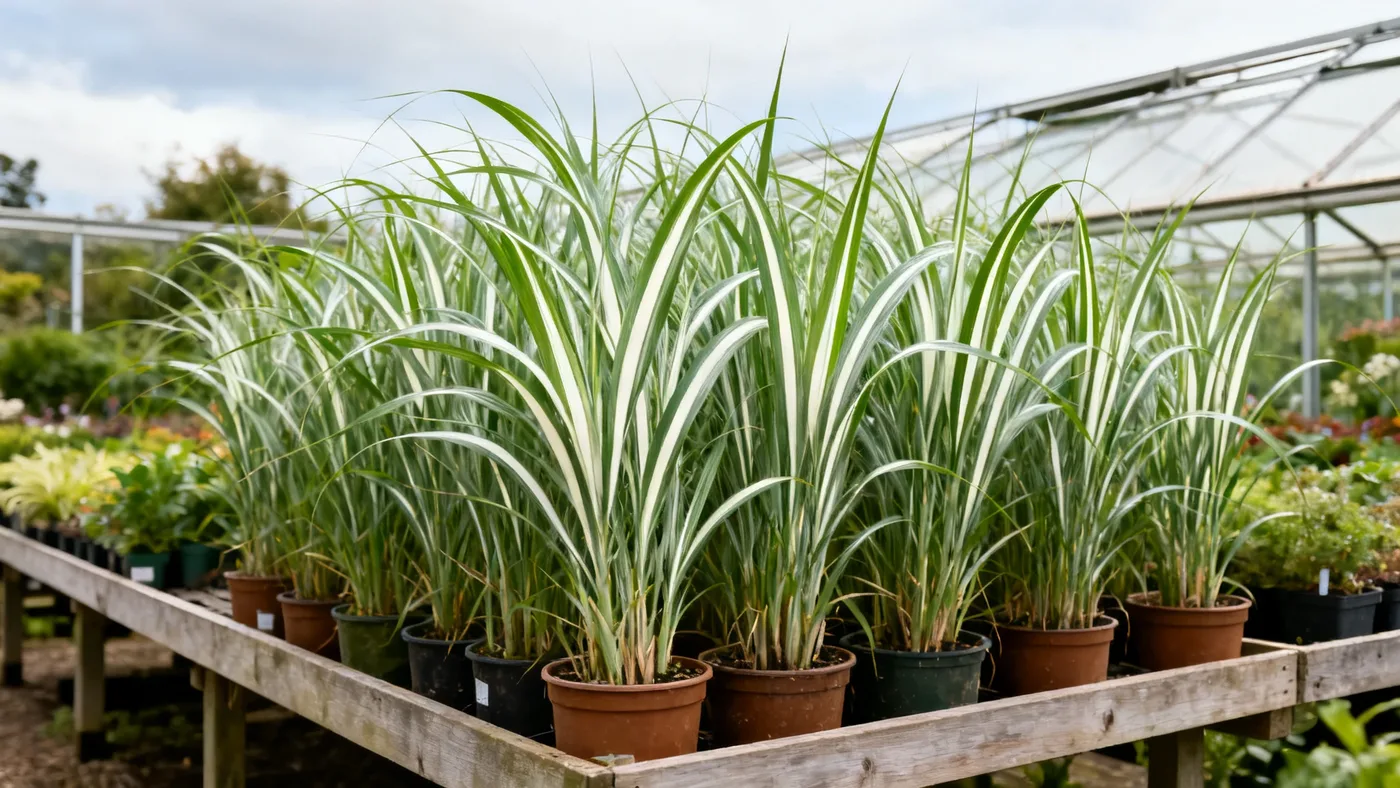
Silver Feather Grass Buying Guide: What Size to Choose
Why Size Matters When Buying Silver Feather Grass
When you're ready to buy Silver Feather Grass (Miscanthus sinensis 'Silberfeder'), one of the most important decisions comes before the plant even reaches your garden: what size to purchase. The container size affects not just the initial cost, but how quickly the plant establishes, how soon you'll see full blooms, and whether it thrives in its first season.
Most nurseries offer Silver Feather Grass in three standard container sizes. Understanding the differences between them, and knowing which fits your space and timeline, saves money and frustration.
Standard Container Sizes Available
Nursery-grown Silver Feather Grass is typically sold in three sizes.
Quart containers hold small, young plants. These are the most affordable option and the lightest to transport. They're single plants, not divisions, so they'll need careful attention during establishment. Growth is slower in year one as the root system develops under the soil surface.
#1 containers (also called one-gallon pots) are the middle ground. They contain a more developed plant with a larger root system, so establishment is faster. Most gardeners find this is the sweet spot between cost and performance. You'll see visible growth in the first season, and flowering by year two.
#3 containers (three-gallon pots) hold the largest specimens. These are well-established plants, often carrying 2 to 3 years of growth already in the pot. A #3 plant can reach near mature size by mid-season and may flower in its first year. These cost more upfront, but require less patience.
Match the Container Size to Your Needs
The right size depends on three things: your timeline, your budget, and the space you're filling.
If you're filling a large gap and want impact fast: Go with #3 containers. These 2 to 3-year-old plants are ready to perform. You'll have near-mature height and form by late summer. The trade-off is cost and weight for handling.
If you're patient and budget-conscious: Quart containers work, but plan for slow first-year growth. The plant will focus on roots, not shoots. You're looking at a two to three-year horizon to reach full mature size and best bloom display. Plant in spring, after the last frost, to give a full season of root establishment before winter dormancy.
If you want balance: #1 containers are the standard choice. Fast enough to feel like progress, affordable enough for mass plantings. Most commercial landscapers use #1s for this reason. You'll see steady growth through the first year and strong performance by year two.
For spacing, plan on 3 to 4 feet between plants if you're creating a screen or mass planting. A single #1 or #3 plant needs at least 3 feet of open space on all sides to spread to its mature width of 3 to 4 feet, occasionally reaching 5 feet at full spread.
What to Look for: Quality Indicators
When you arrive at the nursery or open a mail-order delivery, check these things first.
Foliage color and density. Silver Feather Grass foliage should be a healthy medium to deep green. The narrow blades should be tightly packed, filling the container from top to soil line. Sparse, thin, or yellowing foliage signals stress. A few brown lower leaves are normal, but avoid plants with brown or dead patches in the middle of the clump.
Stem thickness and firmness. Feel the stems gently. They should be firm and upright, not hollow or mushy. Weak or hollow stems mean the plant is struggling or was damaged in shipping. Silver Feather Grass grows fast once established, gaining roughly 1 to 3 feet of height per growing season, but only if the base is healthy to begin with.
Root system vitality. If you can peek at the drainage holes, roots should be visible but not a solid mat. Some white roots are excellent. A dense root prison means the plant has outgrown its pot and stress could follow after planting. Ask the nursery how long the plant has been in its current container if you see this.
No visible pests or disease. Look for webbing, cottony mealybug clusters, or tiny moving insects. Silver Feather Grass is very pest-resistant, but stressed plants in crowded nursery conditions occasionally pick up mealybugs or aphids. Avoid any plant with spots, streaking, or rust-colored marks on the blades. These indicate leaf blight or leaf spot, especially in prolonged humid conditions.
Soil moisture level. The soil should be moist but not soggy to the touch. Soggy soil in a #3 container is a red flag for root rot, especially if the plant arrived by mail and sat in a box.
Key Features to Compare Between Plants
If you're shopping between multiple options, here's what to weigh.
Age and size within the category. Two #1 plants from different nurseries may not be identical. One might be a faster grower, the other a more compact year-old. Ask how long the plant has been growing in its current container and whether it's already shown flowers. More age in the pot is not always better (root-bound risk), but age plus recent repotting into a larger container is ideal.
Cultivar confirmation. Confirm you're buying 'Silberfeder', marketed in English as 'Silver Feather', and not a similar cultivar like 'Gracillimus' or 'Morning Light'. These look alike to the untrained eye but have different mature habits. Look at the label or ask the grower to confirm the exact name.
Zone suitability. Silver Feather Grass thrives in USDA zones 5 through 9. If you're in zone 4 or colder, this plant may not return reliably after winter. If you're in zone 10 or warmer, check with the nursery about local performance. Growing climate affects how the plant responds to your specific water, humidity, and winter conditions.
Local nursery versus mail-order. Local nurseries let you inspect the plant before purchase and you can leave with it same-day. Mail-order convenience comes with shipping risk: plants can dry out or get battered in transit. If ordering by mail, confirm the nursery ships in moist media and guarantees survival on arrival.
Buying at Different Price Points
Silver Feather Grass pricing varies by region and grower. When budgeting, know what to expect at each tier.
Budget option: Quart containers. These young, field-grown plants are the most affordable entry point. You're paying for potential, not immediate impact. Growth is slower the first year as roots establish. Good choice if you have time and are planting a large number of plants.
Mid-range: #1 containers. Established, ready to grow. This is where most gardeners find the best value. The plant will give you visible progress in one season and solid performance by year two. The price-to-performance ratio is highest at this size, which is why landscape professionals use them for standard installations.
Premium: #3 containers. Mature, impressive specimens. You're paying for years of nursery growing and for the convenience of near-instant size. Useful for screening projects or when you want a focal point right away. Best for professional landscape installations or when budget allows and patience does not.
Prices vary significantly by region and grower reputation. Online comparison shopping is common, so check multiple sources. If buying by mail, factor in shipping costs, which can be substantial for larger containers.
Red Flags: What to Avoid
- Yellowing or purple foliage. This signals nutrient stress, poor drainage, or cold shock. These plants often struggle even after planting.
- Visible insects, webbing, or cottony clusters. Even though Silver Feather Grass is very pest-resistant, infested plants bring problems to your garden.
- Soft or mushy stems at the base. A sign of rot. The plant is unlikely to recover after planting.
- Bone-dry soil that won't rehydrate. A plant dried out in a pot may not rehydrate properly after planting. Check that the media is moist to the touch.
- Severely root-bound specimen in a quart or #1. If the entire bottom is a solid mass of circling roots, the plant is stressed. Even if it survives, it may never establish a normal root pattern in the ground.
- Cracked or broken containers. Damage to the pot invites root exposure and pest entry.
- Misidentified cultivars on the label. Miscanthus cultivars are easy to mix up at busy nurseries. Confirm the label name or ask staff to verify.
- Claims of extreme cold-hardiness. Silver Feather Grass is rated for zones 5 through 9. If a nursery promises it in zone 3 or 4, ask detailed questions about their success rate.
Where to Buy Silver Feather Grass
Local garden centers. Inspect the plant in person, no shipping delays, and you support a local business. Staff can often answer detailed questions about local growing conditions. Prices are typically mid-range.
Specialty ornamental grass nurseries. These growers focus on grasses and sedges. Quality tends to be high, and staff can answer detailed questions about cultivar differences and growth habits. Some ship mail-order or offer local pickup. Many operate as small operations with limited online presence, so search your region for 'Silver Feather Grass for sale' or 'Miscanthus sinensis nursery near me'.
Online plant retailers. Convenience and sometimes competitive pricing, but you can't inspect before buying. Reputable retailers ship bare-root or in dormant season to reduce shipping shock. Read customer reviews specific to Silberfeder and check their stated survival rates and hardiness claims.
Landscape supply companies. These cater to contractors but often sell to homeowners. Prices for #1 and #3 containers are competitive. Bulk discounts apply if you're ordering multiple plants for screening or large projects.
Mail-order perennial specialists. Many ship quart and #1 sizes nationwide. Always confirm they ship during the right window for your zone, which is spring, after the last frost, to allow establishment before winter.
Before ordering online, read reviews specific to the cultivar 'Silberfeder' and verify the nursery's growing climate matches yours or is cooler. A plant grown in the Pacific Northwest performs differently when planted in the Southeast.
Quick Reference: Container Size Comparison
| Container Size | Plant Maturity | First-Year Growth | Likely Year-Two Bloom? | Best For |
|---|---|---|---|---|
| Quart | Young, field-grown | Slow (root-focused) | Unlikely | Budget plantings, patient gardeners, mass plantings |
| #1 (1 gallon) | Established, 1-2 years old | Steady (visible progress) | Likely | Most home gardeners, best overall value |
| #3 (3 gallon) | Mature, 2-3 years old | Fast (near-mature by mid-season) | Often yes, first year | Instant impact, large-scale screening, professional landscapes |
Next Steps: From Purchase to Planting
Once you've chosen your size and brought the plant home, the next critical step is proper planting and establishment. Silver Feather Grass needs full sun for best flowering and upright habit. The plant adapts to most well-drained soils but prefers moist, fertile soil. Plant in spring, after the last frost, to allow a full season of root development before winter dormancy.
For detailed instructions on planting depth, soil preparation, watering through the first season, and ongoing care, see the Silver Feather Grass Care Guide.