Why Does Silver Feather Grass Curl? Causes and Fixes
At 3 p.m. on a hot day, you walk out and find every blade on the clump rolled tight like a drinking straw. The first worry is that the plant is dying. It almost never is. A Silver Feather clump that stands 7–8 feet tall carries a huge amount of leaf, and rolling is how it shrinks that surface when the afternoon sun asks for more water than the roots can deliver.
Curling still deserves a look, because the same rolled blade can mean four different things, and only some of them call for the hose. Water for the wrong reason and you can make things worse. In this article, we'll go through the afternoon curl that fixes itself, the all-day curl of true drought, the curl that follows planting, and the soggy-soil curl that fools almost everyone.
How Silver Feather Grass Blades Roll and Why It Matters
Curling means a blade folds lengthwise along its midrib, the pale central vein that runs from base to tip. Instead of lying flat, the two halves close toward each other until the blade looks like a narrow tube. Specialized cells along the blade lose water pressure, and the leaf folds at that hinge. Nothing tears, and the blade stays green.
Think of pulling the blinds on a west window in the afternoon. The room is the same, but less sun comes in, so less heat builds up. A rolled blade does the same job. It exposes less surface to sun and wind, so the plant loses less water through the tiny pores on the leaf, called stomata.
Curled, Wilted and Browned Are Three Different Things
A wilted blade goes limp and droops. A browned blade is dying or already dead. A curled blade is still green, still firm and still working, just folded. Keeping those three apart is the whole skill of diagnosing this plant, and the rest of this guide builds on it.
Why Silver Feather Shows It so Clearly
Silver Feather is a warm-season grass that wants full sun, and its blades stand stiffer and more upright than the long, arching blades of the species. That posture makes a fold easy to spot from across the yard. Treat it as an early-warning signal, a message from the plant and not an emergency.
Rolled by Afternoon, Flat by Morning
Check the same clump in the evening or first thing the next day. If the blades have opened flat again, you saw heat stress, and the plant handled it exactly as designed. Through the hottest hours the leaves lose water faster than the roots can pull it up, so the blades fold to slow the loss. Once the air cools, pressure returns and they open.
One of the most common questions we get is whether to hose the clump down at 3 p.m. when it looks like that. We say no. A midday sprinkle mostly wets the surface, and the plant is already doing the right thing.
What to Leave Alone
Do not fertilize a clump that curls in the afternoon heat, because extra feeding pushes more leaf that has to be kept supplied with water. Do not cut it back, since the folded blades are protecting the plant and the green growth is what feeds next year's plumes. Do not dig it up and move it. A daily curl that reverses overnight is not a reason to act.
When to Water
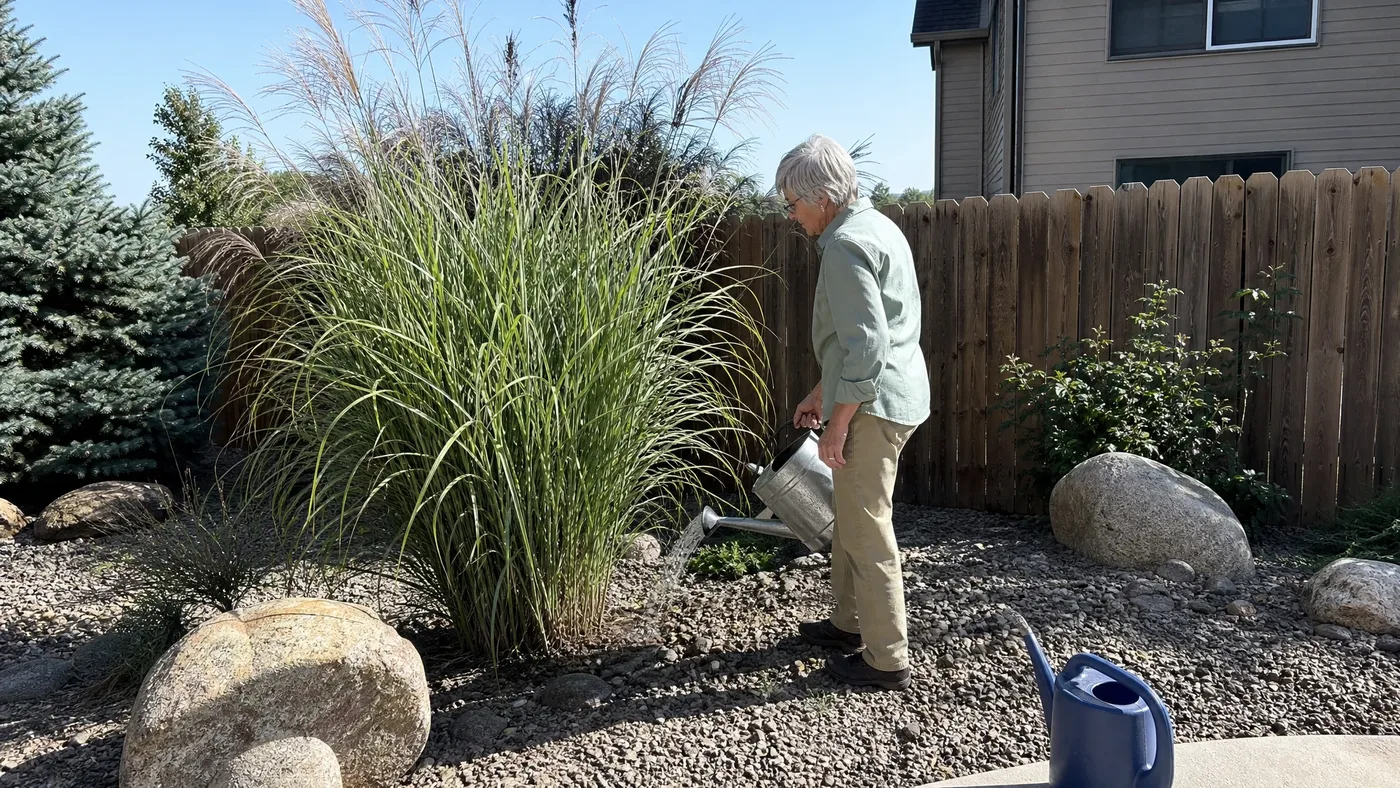
Water only if the soil is dry when you check it in the morning. Push a trowel in a few inches from the crown and look at what comes up. Damp soil means skip it. Dry soil means a slow, deep soak, which the next section walks through. Sandy ground dries faster than clay, so check those clumps more often. Our guide to heat and dry spells covers how much dry time a settled clump handles.
Silver Feather Grass That Stays Curled All Day
If the blades are still rolled at breakfast, the problem has moved past heat. Tan tips alongside the rolling are the giveaway. Tips sit farthest from the roots, so they run out of water first and dry out. A clump in this state has used up the moisture in its root zone and cannot recover overnight, so the curl never relaxes.
Check the Soil Depth First
Do not trust the surface, which can look dark after a light rain while the roots sit in dust. Dig a small hole with a trowel about a hand's width from the crown and go down to the depth of the blade. Soil that is dry and crumbly at that depth confirms drought. Soil that is cool and damp means you should read the section on soggy ground instead.
Give It a Deep Soak
Once you have confirmed dry soil, follow these steps:
- Lay a hose at the base of the clump and run it at a slow trickle, so the water sinks in and does not run off.
- Keep it running until the soil is wet to the full trowel depth when you dig a test hole beside it.
- Water early in the day, so the blades have moisture before the afternoon sun arrives.
- Spread a layer of mulch around the clump, kept off the crown, to slow evaporation.
- Check the blades again the next morning. Most should be opening by then.
Tan tips will not turn green again, and that is fine. Leave them until the early spring cut-back, when the old growth comes off anyway. For a regular schedule, see our guide to watering from establishment to maturity.
Silver Feather Grass Curling Weeks After Planting
A new plant that curls in its first weeks is almost always dealing with transplant shock. Moving a grass from a pot into the ground cuts or disturbs some roots, and the remaining roots have not yet grown out into the surrounding soil. The top is full size, but the plumbing is small, so even moderate heat can make the blades roll.
Watering Rhythm for a New Plant
Most grasses need about an inch of supplemental water in the first few weeks of establishment, and sandy soil needs it more often. After that, don't stop. Iowa State advises keeping new plantings well watered throughout the first growing season. Soak the root ball and the soil around it, then let the top dry slightly before the next soak.
Help the Roots, Then Wait
Check the planting depth if curling is severe. The crown should sit level with the soil, not buried, and our guide to site, timing and tips for planting shows how. We pot and pack our plants so the root ball arrives intact, but every plant that changes beds still needs a few weeks to settle.
Skip fertilizer and skip pruning. What the plant needs is roots, and roots grow in steady moisture. New green shoots rising from the center of the clump tell you the roots have taken hold. With a grass that grows at a medium pace, the recovery is gradual, not sudden, so judge it by weeks and not by days.
Soggy Soil Can Curl Silver Feather Grass Too
This is the one that surprises people. The blades curl, the lower leaves start to yellow, and the base of the clump sits in wet ground. It looks like thirst, so the natural response is more water, and that is exactly wrong.
Why Too Much Water Mimics Drought
Roots need air as well as water. When soil stays saturated, the air pockets between the particles fill up, and the roots suffocate and stop working, or begin to rot. A root that cannot function cannot deliver water to the leaves, so the blades behave as if the soil were bone dry. The clump is thirsty while standing in a puddle.
Silver Feather does best on moist but well-drained soil. Moist is fine. Soggy for days is not.
The Fix
Stop all watering and dig a test hole beside the clump. If water seeps into it, or a handful of soil squeezed from trowel depth drips or stays a slick ball, the ground is too wet. Let it dry out. Then look at the cause: a low spot, heavy clay, a sprinkler that hits the clump daily, or a pot without drainage holes.
If the site holds water, lift the clump in spring and replant it higher, or fix the drainage first. Our guide to soil, drainage and pH explains how to correct heavy ground.
Is It Curl or Something Else?
Before you treat anything, make sure you are looking at curl. Several other problems affect the blades, and each has a different fix. The key question is whether the blade is folded or damaged.
Browning Is Not Curling
A whole clump that turns tan in fall is going dormant, which is normal and a separate matter from curl. A clump that browns from the tips in summer while the blades stay flat usually needs a look at watering. Curl means the fold along the midrib is the main sign, with the blade itself still green.
Pests and Disease Rarely Roll Blades
Maiden grasses are essentially immune to disease and insect problems, so a pest is a poor first guess. Chewed edges or holes are not curl. Rust is the one disease to know, since rust diseases occasionally infest the foliage of this species, and it shows as spots on the surface of flat blades. Our guide to pests, diseases and fixes covers those cases.
Flopping is another look-alike. If the whole clump leans or splits open, that is a structural issue and has nothing to do with rolling blades.
Reading Your Silver Feather Grass by Its Blades
Put it all together and the blades become a simple gauge. The table below links what you see to the likely cause. Always pair it with the time of day and a trowel test in the soil.
| What You See | Likely Cause | What to Do |
|---|---|---|
| Rolled by afternoon, flat by morning | Heat stress | Leave it alone and water only if the soil is dry |
| Rolled all day with tan tips, dry soil | True drought | Deep, slow soak in the morning |
| Rolled in the first weeks after planting | Transplant shock | Steady watering and patience |
| Rolled, yellowing, wet soil at the base | Overwatering or poor drainage | Stop watering and fix drainage |
| Flat blades with spots or holes | Not curl: rust or damage | Identify the problem separately |
The reverse reading matters as much. A healthy blade lies flat, stays green and stands upright. When you see that, the roots have the right balance of water and air, and the plant has nothing to ask of you. Silver Feather asks for little, so most of the time the best response to a good-looking clump is to walk past it.
Time of Day and Soil Beat the Hose
Curling is a water-saving move, not a death sign. Afternoon curls that relax by morning need nothing, curls that last all day with dry soil need a deep soak, new plants need steady water and patience, and curls on soggy ground need the water turned off.
The next time you walk the garden and see rolled blades, check the time of day and the soil before reaching for the hose. Those two answers settle the question nearly every time.
Silver Feather Grass
Nursery-grown Silver Feather Grass in sizes from Quart Plant, shipped to your door.
From $49.49
Shop Now →Silver Feather fills sunny rows on our farms, where the soil stays moist but drains well, the same ground this guide steers you toward when blades curl. Every plant we ship comes from our own rows, and that goes for our grasses as much as our trees and shrubs. If you would rather start over with a healthy clump, our shop has Silver Feather waiting.